Three legs. Miss one, the stool falls.
Most first-time searchers think about acquisition financing the way they think about a mortgage. You find a lender. The lender funds the deal. You close.
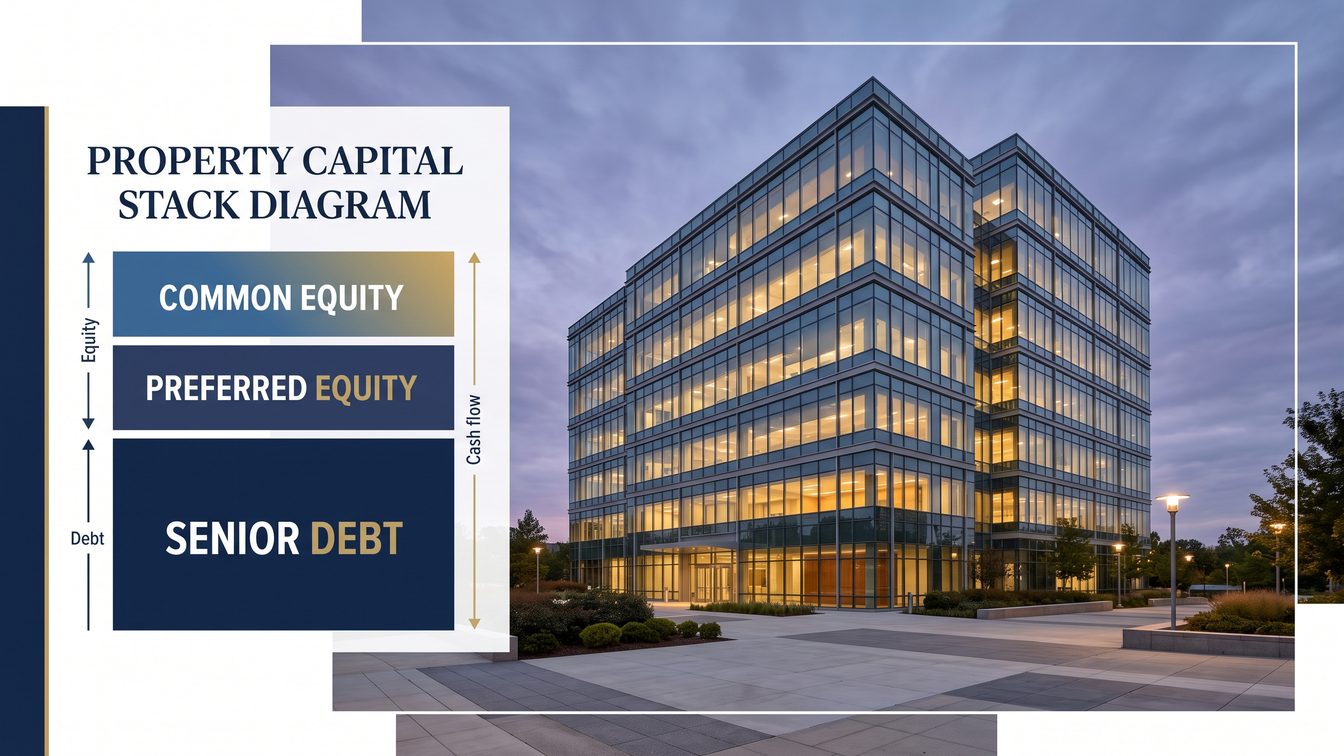
That's not how search fund acquisitions work. A typical lower-middle-market acquisition runs on a three-part capital stack: an SBA 7(a) loan, a seller note, and equity from search fund investors. Sometimes a fourth leg — personal equity from the operator — sits underneath.
Every leg serves a different function. Every leg has different timing, different risk, and different negotiation dynamics. If you don't understand the structure before you submit your LOI, you're walking into the most important financial transaction of your life without a map.
EOD training principle: before you approach the device, you understand every component and how they interact. Finance is no different. Know the stack before you move.
The SBA 7(a): the workhorse of lower-middle-market ETA
The SBA 7(a) loan is the dominant financing mechanism for search fund acquisitions in the $2M–$15M purchase-price range. It's not glamorous. It's the reason most searchers can close.
The basic mechanics: the SBA guarantees up to 85% of loans under $150,000 and 75% of loans over $150,000. Lenders extend the loan; the SBA backstops the risk. For acquisitions, loan limits go up to $5M. Most ETA buyers use multiple SBA lenders or structure alongside non-guaranteed bank debt when the purchase price exceeds the SBA cap.
Key terms to know before you call a lender:
Loan limit. $5M maximum SBA guarantee. Deals above $5M in total financing require either bridge equity, a larger seller note, or a non-SBA senior lender layered above the guaranteed tranche.
Equity injection requirement. The SBA typically requires 10% of total project cost to come from equity — the buyer, search fund investors, or some combination. This is non-negotiable in most lender interpretations.
Processing time. This is where inexperienced buyers get destroyed. SBA loan processing runs 60–120 days from application to funding. Third-party valuation, environmental review, lender credit approval, and SBA guaranty processing all run on separate tracks. None of them wait for you.
The LOI-to-close average in ETA acquisitions is 5.6 months. That number is largely driven by SBA timing. Buyers who sign 45-day exclusivity agreements and budget for a 30-day close are setting themselves up for a failed deal. Sellers who get frustrated at day 60 renegotiate or walk.
Set the right expectations at LOI signing. Sellers who understand the SBA process don't walk. Sellers who don't understand it feel deceived.
Pro tip: Get a pre-approval letter from your SBA lender before you submit serious LOIs. It signals credibility to sellers and brokers. It also forces you to understand your maximum purchase capacity before you're emotionally invested in a specific deal.
The seller note: alignment, not charity
The seller note is the most misunderstood component of a search fund capital stack. Most buyers treat it as a negotiating concession — something you push for because you need the cash. It's not.
A seller note is alignment. A seller who takes back a note — typically 10–20% of purchase price — still has skin in the game post-close. They have a financial interest in your success. They're more likely to provide a meaningful transition. They're less likely to take customers or key employees when they walk out the door.
Standard structure: 3–7 year amortization, 6–8% interest, sometimes deferred for 6–12 months post-close to give the new operator cash-flow runway. Seller notes are typically subordinated to the SBA loan, which the SBA requires.
The real negotiation isn't the interest rate. It's the amount and the subordination terms. SBA lenders have specific requirements about how seller notes can be structured relative to their position. Get these terms negotiated before you finalize your capital structure — not after you've agreed on price.
One hard rule: never allow the seller note to create a Year 1 debt service burden that strains operating cash flow. A $14.4M acquisition — the median purchase price in the [Stanford GSB 2024 Search Fund Study](https://www.gsb.stanford.edu/faculty-research/case-studies/2024-search-fund-study) — at 7.0x EBITDA implies roughly $2.1M EBITDA. After SBA debt service, a $2M seller note at 7% over five years adds significant annual obligations. Model the full debt stack before you agree to anything.
Investor equity: the structure that makes searchers different
Here's where search funds diverge from independent sponsors and PE firms: the investor equity that capitalizes a search fund acquisition is raised before the acquisition is identified.
The traditional search fund model: an entrepreneur raises $350,000–$600,000 in search capital from a pool of individual investors. That capital funds the two-year search phase — salary, travel, deal costs. When an acquisition is identified, the same investor pool has the right (not the obligation) to convert their search capital and contribute additional equity to fund the deal.
The Stanford 2024 study found a median of 16 investors per acquisition — 12 from the original search capital pool, 4 new investors brought in specifically for the deal.
For searchers today, the investor equity tranche typically targets 20–30% of total capitalization. This equity sits above the SBA loan and seller note in the priority stack, meaning it absorbs losses first. In exchange, investors earn preferred returns — typically 8–10% — plus equity upside, with the operator earning carried interest (founder equity) that vests over the holding period.
For self-funded searchers — a growing segment of ETA — the equity injection comes from personal capital, family office relationships, or a small number of co-investors rather than a formal investor pool. The capital structure still functions the same way. The sourcing is different. For more on the self-funded path versus the traditional model, see [Self-funded search fund: what the math actually shows](/blog/self-funded-search-fund).
Working capital: the number nobody talks about
Here's the component that breaks first-time buyers: working capital.
When you buy a business, you buy the operations. You don't buy the cash sitting in the bank account. That cash belongs to the seller — it goes with them at close.
A business that runs on 60–90 days of receivables float needs working capital in the deal structure to keep operating from day one. If you don't fund it, you close on a Monday and can't make payroll by Friday.
Working capital requirements are negotiated in the purchase agreement. Standard convention: the deal transfers with a "normalized" working capital level that keeps the business operating at historical norms. Amounts above the target peg go to the seller; amounts below come off the purchase price or require a working capital injection.
First-time buyers routinely miss this. Budget for it. Model it explicitly. A business with $500,000 in average receivables and 45-day terms needs roughly $500,000 in working capital built into the deal.
The broken-deal budget
One number most searchers never build into their financial plan: the cost of broken deals.
Sixty-nine percent of signed LOIs fail to close. The average successful searcher signs 3.2 LOIs before completing an acquisition. Each broken deal consumes legal fees, Quality of Earnings costs, and months of search salary.
The standard guidance: reserve $50,000 per deal for broken-deal costs. That's $150,000 across 3 LOIs — a real number that should sit in your search capital budget from the start.
Searchers who don't budget for broken deals face a specific and dangerous psychological pressure: the cost of the current deal's due diligence distorts their judgment about whether to walk. You should be able to kill a deal at day 70 and start the next one with the same discipline you had at day one. That's only possible if you've already absorbed the loss on paper.
Putting it together
A typical search fund acquisition at a $3M EBITDA business at 7.0x purchase price — $21M total — might look like:
- SBA 7(a) loan: $5M (at the guarantee cap)
- Non-SBA senior bank debt: $7M (alongside the SBA)
- Investor equity: $6M (from the search fund investor pool)
- Seller note: $3M at 7%, subordinated, 5-year amortization
- Total: $21M
This is a simplified illustration. Real structures vary based on lender requirements, EBITDA coverage, and investor negotiations. The principle doesn't change: three to four legs, each with a different purpose and timeline.
Know every leg. Negotiate every leg. Model the combined debt service against realistic EBITDA before you sign anything.
The capital stack is the device. Understand every component before you approach it.
---
*Jonathan Bates is a partner at Patriot Growth Capital and a U.S. Navy EOD officer. PGC works with veteran operators navigating the acquisition process in the lower middle market. Learn more at [/blog/author/jonathan-bates](/blog/author/jonathan-bates).*
Frequently Asked Questions
What is the SBA 7(a) loan limit for search fund acquisitions and how long does approval take?
The SBA 7(a) program has a maximum five million dollar guarantee. SBA loan processing runs 60 to 120 days from application to funding, driven by third-party valuation, environmental review, lender credit approval, and SBA guaranty processing running on separate tracks. Buyers who sign short exclusivity agreements and budget for a 30-day close set themselves up for a failed deal.
Why does a seller note create alignment between a buyer and a selling owner?
A seller who carries a note, typically 10 to 20% of purchase price, still has financial skin in the game post-close. That gives them a direct interest in the buyer's success and makes them more likely to provide a meaningful transition. Sellers are also less likely to take customers or key employees when they walk out the door.
What is the working capital problem that first-time buyers most often miss?
When a buyer acquires a business, the cash in the bank account belongs to the seller and leaves at close. A business that runs on 60 to 90 days of receivables float needs working capital built into the deal structure to keep operating from day one. A business with 500,000 dollars in average receivables and 45-day terms needs roughly 500,000 dollars in working capital funded at close.
How much should a searcher budget for deals that fall apart before closing?
Sixty-nine percent of signed LOIs fail to close, and the average successful searcher signs 3.2 LOIs before completing an acquisition. Each broken deal consumes legal fees, quality of earnings costs, and months of search salary. Standard guidance is to reserve 50,000 dollars per deal for broken-deal costs, totaling roughly 150,000 dollars across three LOIs.