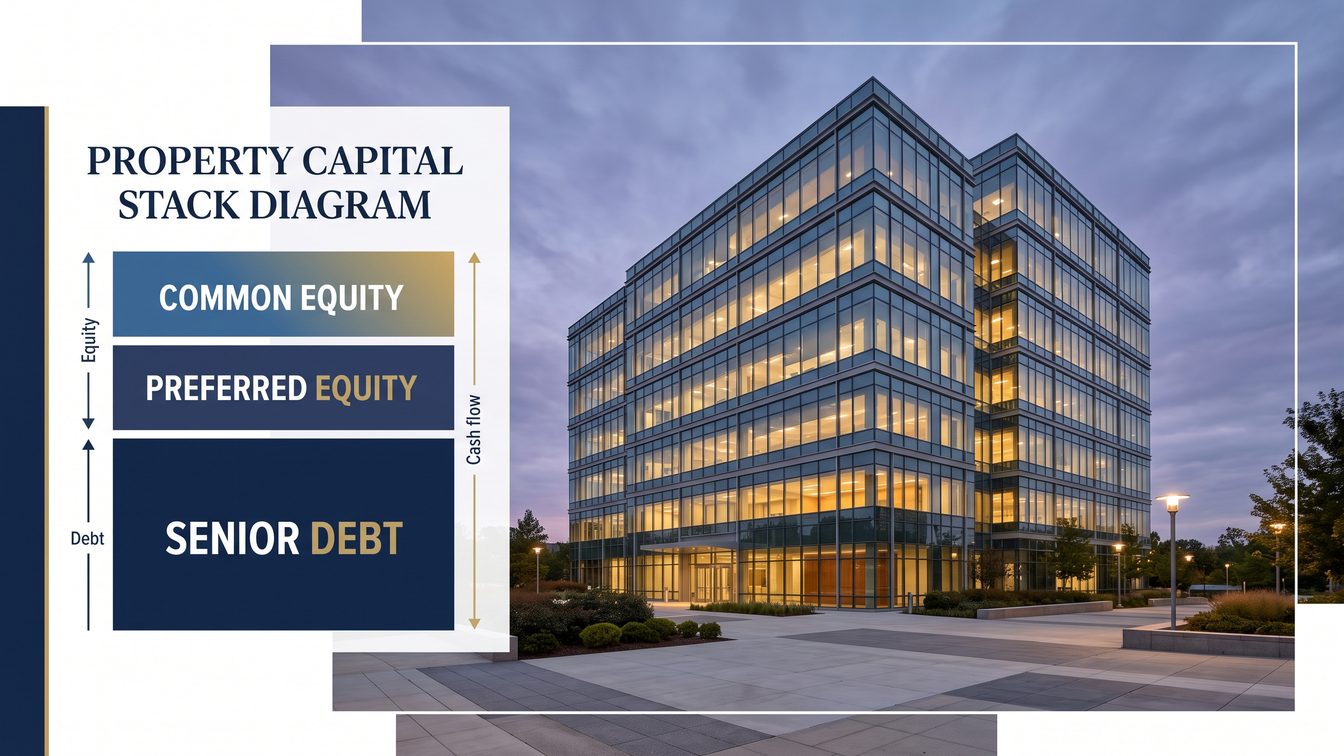
The SBA's veteran business loan programs are real and worth using. They're also not designed for operators who want to scale past a certain threshold. Know the difference before you commit to the wrong capital stack.
The programs that actually exist
Veterans Advantage is the SBA's umbrella framework for veteran borrowers. Under the current 7(a) Veterans Advantage program (SOP 50 10 8, effective June 2025), qualified veteran-owned businesses receive fee waivers on SBA guaranty fees — a meaningful cost reduction on loans up to $5 million. The fee savings on a $500,000 loan can run $5,000–$15,000 depending on term and guaranty percentage.
Three programs cover the main use cases:
SBA 7(a) Veterans Advantage. The workhorse. Up to $5 million. Fee waivers for veterans. Standard SBA terms — up to 10 years for working capital, up to 25 years for real estate. Requires 10% equity injection for most business acquisitions. Average loan size to veteran borrowers: $350,000–$420,000, slightly below the program average of $443,000 per SBA FY2023 data.
SBA Express. Faster turnaround — 36-hour approval response for loans up to $500,000. Veterans qualify for the same fee waivers as under Veterans Advantage. Use this for working capital and equipment, not acquisitions.
Military Reservist Economic Injury Disaster Loan (MREIDL). Niche but important. Up to $2 million, fixed at 4% interest, 30-year term. The purpose is specific: cover operating losses when a key employee gets called to active duty. If you run a business where Guard or Reserve personnel are in critical roles, this is the program to know when a mobilization hits. Most operators sleep on it. They shouldn't.
Who qualifies
Eligibility is broader than most people realize. Veterans Advantage covers:
- Honorably discharged veterans
- Active duty military transitioning out within 12 months
- Reservists and National Guard members, active or inactive
- Current spouses of any of the above
- Surviving spouses of veterans who died in service or from a service-connected disability
The veteran ownership threshold is 51%. Same floor as SDVOSB — different verification path. SDVOSB runs through the [VA's VetCert program](/blog/sdvosb-certification-vetcert/), which carries contracting preferences. Veterans Advantage runs through SBA-approved lenders and applies to commercial loans regardless of whether you hold government contracts.
The financing gap is real
In FY2023, the SBA made approximately 2,800 loans to veteran-owned businesses totaling $1.2 billion. By FY2025, that figure crossed $1.3 billion. That's real volume. It's also less than 2% of the $1.0 trillion in annual receipts generated by veteran-owned businesses nationally.
There are 1.6 million veteran-owned businesses in the United States — 261,000 of which are employer firms, representing 4.4% of all U.S. employer firms. The SBA is serving a small fraction of those with debt capital. The Federal Reserve's Small Business Credit Survey (2024) found that 51% of veteran business loan applicants received at least some of the financing they sought, compared to 52% for non-veterans. Only 34% of veteran applicants received all the funding they requested, versus 36% of non-veterans.
That gap looks modest statistically. Operationally, it means one in three veterans who applies for full funding gets turned down for the full amount. The other two work with partial approvals or bridge the gap elsewhere — usually personal savings, family capital, or waiting.
Where SBA capital hits a ceiling
SBA loans are debt. They're backed by personal guaranty on most transactions. That structure works for working capital, equipment, and real estate. It becomes a constraint when the goal is:
Acquiring another company. SBA can fund business acquisitions. The 10% equity injection requirement and personal guaranty stay in place. On a $2 million acquisition, that's $200,000 out of pocket before close, plus full personal exposure on the remainder.
Rolling up multiple businesses. There's no facility for acquisitive growth under SBA programs. Each transaction requires a new loan, new underwriting, and new personal guaranty. The debt stacks. The guaranty exposure compounds. Most operators hit a practical ceiling somewhere around the second or third deal.
Attracting a capital partner. SBA debt doesn't bring an operating partner or mentorship infrastructure. The lender underwrites the deal and monitors repayment. That's the relationship. There's no playbook, no network, no co-investor who has been through the same terrain.
The SBA is built for the small business at one location. It's not engineered for the operator who wants to own a platform.
PE capital: what the structure actually buys
This is where the choice branches.
SBA debt is the right tool for buying a single business, funding an expansion, or bridging a working capital gap. It's cost-effective, accessible, and the fee waivers under Veterans Advantage make it genuinely worthwhile for the first move.
Private equity capital is the right structure when the operator wants something SBA can't provide: a long-term capital partner with skin in the game, co-investment capacity across multiple acquisitions, and operational mentorship from people who have closed deals in the same market segment.
The trade is equity and some governance involvement for capital depth and expertise. For most veteran operators, that trade is worth making — not on the first deal, but on the third or fourth, when the business is generating $1–$3 million in EBITDA and the next move requires more than one person's guaranty capacity.
The lower middle market — businesses with $2–$10 million in EBITDA — is where this decision point arrives. PE firms that focus on this segment are not the headline-grabbing mega-fund operators. They're capital partners doing operational work. The best ones bring due diligence rigor, transition planning, and networks of operators who've run similar businesses. [The acquisition process for lower middle market businesses](/blog/veteran-business-exit-planning/) is different from larger PE transactions — the founder relationship matters, and so does the buyer's operating credibility.
Patriot Growth Capital is built on that premise. Veteran-founded, focused on the lower middle market, with a 60-month operator development pipeline and an Acquire, Mentor, Invest model. ATLVets is a strategic partner. Five percent of revenue goes back to the veteran community. That's not marketing language — it's the institutional structure.
The SBA programs get a veteran operator into the game. Capital partnerships built on operational credibility are how they build something that outlasts them.
Three decisions before you borrow
1. Qualify for Veterans Advantage before you talk terms. The fee waivers apply automatically through participating SBA lenders. There's no separate application. If you're eligible and not using it, you're leaving money on the table.
2. Don't overleverage the initial acquisition. Personal guaranty on an SBA loan is real exposure. Model the debt service at 1.25x DSCR minimum before closing. A business that can't service the acquisition debt at that coverage ratio is already underwater in a flat year.
3. Know what debt can't do. If the plan is to own multiple businesses in the lower middle market over the next decade, SBA debt is one component of the capital stack — not the full solution. Build the operator skills and the investor relationships in parallel, before you need them.
The mission doesn't end at separation. The veteran who owns a $5 million EBITDA business in ten years built that intentionally, with the right capital at each stage and the right partners when the leverage points appeared.
SBA loans are where that journey often starts. They are rarely where it ends.
---
Sources: [SBA veteran-owned business resources](https://www.sba.gov/business-guide/grow-your-business/veteran-owned-businesses); SBA FY2023 Annual Report; Federal Reserve Small Business Credit Survey 2024; U.S. Census Bureau, Survey of Business Owners.
---
FAQ
Q: What is the SBA Veterans Advantage program?
The SBA Veterans Advantage program waives guaranty fees on SBA 7(a) loans for qualifying veteran-owned businesses. It applies to loans up to $5 million and covers honorably discharged veterans, active duty transitioning members, Reservists, National Guard members, and their spouses or surviving spouses.
Q: How much can a veteran borrow through the SBA?
Under SBA 7(a), the maximum loan amount is $5 million. Average loans to veteran borrowers ran $350,000–$420,000 in FY2023. The SBA Express program caps at $500,000. MREIDL loans cap at $2 million for businesses affected by military deployment.
Q: What's the difference between an SBA loan and PE capital for veteran business owners?
SBA loans are debt secured by personal guaranty — best for initial acquisitions and working capital. Private equity capital provides an equity partner with operational expertise and acquisition capacity, better suited for operators building a multi-business platform in the lower middle market.
Q: Do veteran business owners get better interest rates on SBA loans?
Not typically lower rates, but fee waivers under Veterans Advantage reduce the total cost of capital meaningfully. The 4% fixed rate on MREIDL loans is an exception — it's significantly below market and reserved for qualifying businesses affected by Guard or Reserve mobilizations.
Frequently Asked Questions
What fee benefits do veteran business owners receive on SBA loans?
Under the SBA 7(a) Veterans Advantage program, qualified veteran-owned businesses receive waivers on SBA guaranty fees on loans up to $5 million. The fee savings on a $500,000 loan can run $5,000 to $15,000 depending on term and guaranty percentage. Eligibility covers honorably discharged veterans, active duty members transitioning within 12 months, Reservists, National Guard members, and their current or surviving spouses.
What is the MREIDL loan, and when should a veteran business owner use it?
The Military Reservist Economic Injury Disaster Loan covers operating losses when a key employee is called to active duty. It provides up to $2 million at a fixed 4% interest rate on a 30-year term. It is the right tool for businesses where Guard or Reserve personnel hold critical roles and a mobilization would create material economic injury.
Where does SBA financing hit its limits for veteran operators with growth ambitions?
SBA loans are debt backed by personal guaranty. For working capital, equipment, and a first acquisition, that structure works. It becomes a constraint when the goal is rolling up multiple businesses, because each transaction requires a new loan and new personal guaranty that compounds with each deal. There is also no operating partner, mentorship infrastructure, or co-investment capacity built into an SBA lending relationship.
When does private equity capital make more sense than SBA debt for a veteran operator?
PE capital is the right structure when the operator wants a long-term capital partner with co-investment capacity across multiple acquisitions and operational mentorship from people who have closed deals in the same market segment. For most veteran operators, that trade is worth making on the third or fourth deal when the business is generating $1 to $3 million in EBITDA and the next move requires more than one person's guaranty capacity.