TL;DR: According to PitchBook's Q4 2025 Private Capital Indicators, management buyouts represented roughly 14% of US lower-middle-market deal volume in 2025. If you own a business and your leadership team approaches you with a purchase offer, that is a management buyout. Here is what the structure looks like, how the capital stack is built, and what founders and operators need to know before they shake hands.
What a management buyout actually is
A management buyout is a control transaction. The people running a business today acquire ownership from whoever owns it now, typically a founder, a family, or an aging majority shareholder. The defining feature is not the financing. The financing looks nearly identical to a sponsor-led leveraged buyout. The defining feature is who ends up running the company after close: the same team that ran it before close.
That continuity is the point. For founders who spent decades building a business and who care about what happens to it after they exit, an MBO can be the most appealing path available. The management team already understands the culture, the customer relationships, and the operational details that take an outside acquirer 18 months to learn. The transition risk is lower. The disruption is minimal.
For the management team, the appeal is different. They acquire an ownership stake in a business they already know how to run, at a price benchmarked to the current market rather than a speculative premium. The upside, if they grow EBITDA or expand multiple over the hold period, belongs to them rather than to an outside buyer who parachuted in with capital and assumptions.
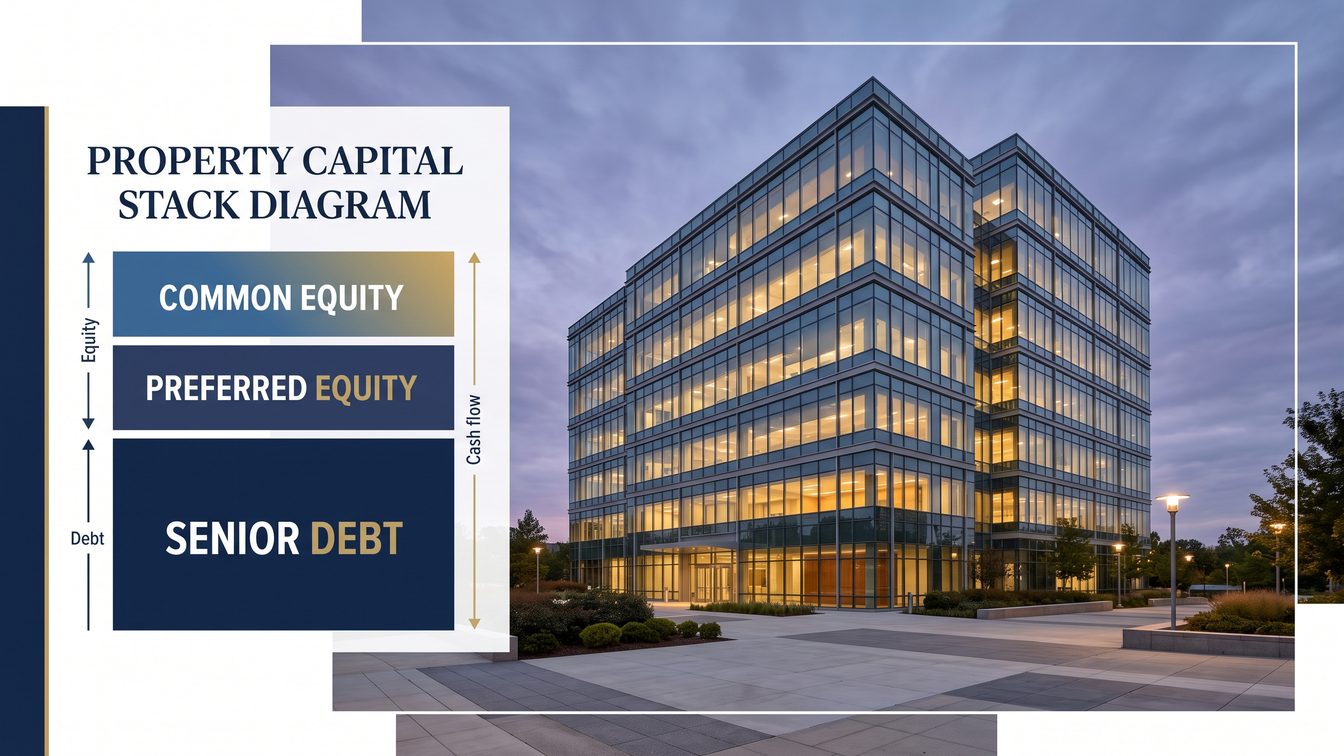
The capital stack in a lower-middle-market MBO
Most management teams cannot fund an acquisition independently. A $50 million enterprise value deal at 4x EBITDA requires roughly $20 to $25 million in equity after debt. Most salaried management teams do not have that capital sitting in a brokerage account.
So almost every lower-middle-market MBO is PE-sponsored. A private equity firm provides the majority of the equity check, the management team contributes personal capital and often rolls over any existing equity stakes they held pre-transaction, and a senior lender provides 3 to 5 turns of EBITDA in debt. The result looks like this:
| Capital layer | Typical percentage | Who provides it |
|---|---|---|
| Senior debt | 40-50% of enterprise value | Bank, BDC, or unitranche lender |
| PE sponsor equity | 30-50% of pro forma equity | Private equity firm |
| Management equity | 10-25% of pro forma equity | Management team rollover + new cash |
| Seller note (if any) | 5-10% of enterprise value | Founder retains subordinated note |
The management team's contribution comes from two sources. Rollover equity is the value of any pre-existing ownership stake the team members hold in the company, contributed into the buyer rather than cashed out at close. New money equity is personal capital written directly into the deal. Combined, management teams in lower-middle-market MBOs typically invest 1 to 3 times their annual salary as personal equity, according to Glacier Lake Partners.
That investment creates alignment. The PE sponsor is not writing a check to a management team with no skin in the game. The management team is not running someone else's capital without personal consequence. Both parties are financially exposed to the same outcome.
What PE sponsors look for in management teams
Not every management team can pull off an MBO. A PE sponsor evaluating an MBO opportunity is asking four questions.
First: Is the team deep enough? If the business depends entirely on one person, the MBO creates as much dependency risk as it removes. The sponsor needs confidence that the CEO, CFO, and operating management are capable of running the company independently. Twelve to 18 months of demonstrated independence before the transaction is the gold standard.
Second: Does the business support the debt load? Senior lenders will provide 3 to 5 turns of EBITDA. That debt must be serviced from free cash flow. Businesses with predictable recurring revenue, defensible customer relationships, and consistent margins qualify. Cyclical businesses with lumpy revenue and thin margins do not.
Third: Is there a credible growth thesis? The sponsor exits in four to six years. They need to believe EBITDA grows, multiple expands, or both. The management team must articulate how they drive that outcome. Organic growth, add-on acquisitions, geographic expansion, or pricing power. The thesis must be specific and supported by actual operating history.
Fourth: Can management fund their equity contribution? Personal capital constraints are real. Sponsors understand this. Many MBO structures include co-invest loans that allow management to borrow their equity contribution from the sponsor at favorable terms, repaid from dividends or exit proceeds. This is not charity. It is a mechanism to ensure that the people running the business have real financial stakes at risk.
The EOD read on MBO valuation risk
There is a structural problem built into every MBO that founders need to understand before they engage in one. Management has an information advantage. They know the pipeline. They know the customer risks. They know the forward performance that the founder may not. That information gap typically means management teams have an incentive to negotiate the lowest defensible valuation, because they are the buyers.
A management team approaching a founder with an MBO offer is not acting adversarially. But they are acting in their own economic interest. That is the nature of the transaction. The founder's obligation is to protect their own.
Two tools exist to close the information gap. First: a parallel market check. Before accepting any MBO valuation, the founder should run a quiet outreach to two or three PE sponsors outside the MBO consortium to establish what outside buyers would pay. That reference price creates the negotiating floor. Without it, the founder is bargaining blind against people who know more than they do.
Second: a third-party fairness opinion. Independent valuations typically cost $15,000 to $30,000. They eliminate estate and legal challenges that cost multiples more to defend post-close. In larger transactions, courts have scrutinized MBO processes where no independent fairness benchmark existed. In the lower middle market, the legal exposure is lower but the economic exposure is not. Founders who skip the fairness opinion are assuming risk they do not need to carry.
The information asymmetry that makes an MBO attractive to management is the same asymmetry that can leave founders undercompensated. Address it directly. That is not distrust. That is process.
How the timeline works
According to the 2026 structural guide from CT Acquisitions, the median MBO takes approximately eight months from first conversation to wire transfer. The process follows five phases.
The management team privately validates the deal concept with an outside advisor, identifies a PE sponsor partner, and gets indicative term sheets. This happens without the seller's awareness, which is one reason founders are sometimes surprised by MBO approaches.
Management approaches the seller with a structured proposal including a preliminary valuation range and a request for exclusivity. The seller should engage independent counsel and a financial advisor before granting exclusivity.
With exclusivity agreed, the management team and sponsor conduct confirmatory diligence. Because management already knows the business, this phase moves faster than third-party diligence. The seller's advisor runs the parallel market check during this window.
The parties negotiate and sign a purchase agreement. Employment agreements, equity grant documents, and shareholder agreements are executed simultaneously.
The transaction closes. The seller receives cash and often a seller note. Management receives equity grants and new employment agreements. The sponsor takes board control and the company moves toward a second exit in year four to six.
When an MBO makes sense and when it does not
An MBO makes the most sense when four conditions are present. The management team is deep, experienced, and has operated with real autonomy. The business has stable, predictable cash flow that supports leverage. The founder's primary motivation includes continuity and culture preservation alongside price maximization. And the PE sponsor universe is not likely to bid materially above the management team's valuation.
An MBO makes less sense when the business requires synergies only an outside acquirer can provide, when the management team is thin or dependent on the selling founder, or when a competitive sale process would produce a meaningfully higher headline price. Founders motivated purely by maximum proceeds should run the competitive process first. MBO valuations are determined by debt capacity and management's equity contribution, not by strategic premium.
For lower-middle-market business owners weighing exit options, the MBO is one tool on the table. It is not the only tool. Understanding what it is, how it is structured, and where it creates risk gives founders the information to evaluate the approach on its merits rather than accepting the first term sheet that arrives with familiar faces attached to it.
The veteran operator angle
At Patriot Growth Capital, we see MBOs appear most often in the businesses we evaluate through our acquisition process. Owner-operators who have built strong management teams often discover that their best buyer is already in the building. The question is whether that management team has the institutional backing to close at a fair price.
Veteran-founded businesses present a specific variation on this dynamic. Military-trained leaders often build management teams with genuine operational depth. The bench exists. The trust between the founder and the team has been tested under pressure. When the founder is ready to exit, that team is frequently ready to lead.
What is usually missing is the institutional partnership. Management teams with operating credibility but limited personal capital need a PE sponsor who understands the lower-middle-market transaction process and is willing to work as a partner rather than a control buyer. That is the model that makes MBOs work.
For founders considering an MBO approach from their management team: do not skip the market check. Do not skip the fairness opinion. And engage a financial advisor who has seen enough MBOs to know where the leverage sits.
For management teams considering an MBO: build the track record of independent operation before you approach the founder. Identify your PE sponsor partner before you have the conversation. And understand that the capital you contribute is not optional. Skin in the game is what makes a sponsor take the bet with you.
Frequently Asked Questions
What makes a management buyout different from a regular leveraged buyout?
The defining feature is who runs the company after close. In a management buyout, the same team that operated the business before the transaction owns and leads it afterward. That continuity reduces transition risk and disruption for customers, employees, and the business itself.
How much personal capital does a management team typically invest in an MBO?
Management teams in lower-middle-market MBOs typically invest one to three times their annual salary as personal equity. That investment comes from rollover equity, which is pre-existing ownership contributed into the buyer vehicle, combined with new personal cash written directly into the deal.
Why should founders get an independent fairness opinion before accepting an MBO offer?
Management has an information advantage because they know the pipeline, the customer risks, and forward performance that the founder may not. A third-party fairness opinion, which typically costs fifteen thousand to thirty thousand dollars, protects the founder from being undercompensated and eliminates estate and legal challenges that can cost multiples more to defend after close.
How long does a lower-middle-market management buyout typically take to close?
The median MBO takes approximately eight months from first conversation to wire transfer. The process runs through five phases, starting with the management team privately validating the concept with advisors and ending with the transaction closing and the sponsor taking board control.