The question nobody asks at the search fund conference:
*What does this actually pay?*
People get absorbed in the return figures. And they should. The 2024 Stanford GSB Search Fund Study tracks 681 search funds formed since 1984. Overall IRR: 35.1%. For exited companies: 42.9%. The 2017–2020 cohort is running north of 50% IRR with nearly half already exited.
Those numbers are real. Stanford has been verifying them for four decades.
But before you get to the exit, you survive the search. Here's what that looks like in dollars.
The search phase: earning before you own anything
Average search salary: $139,000.
That's annual compensation during the search period. The average search runs 19 months from raising your fund to closing your first acquisition. The 2024 Stanford data makes this precise — not an estimate, a tracked figure across hundreds of completed searches.
$139,000 covers the salary. It doesn't cover the risk.
You've exited a corporate role. You're burning 19 months of career runway — closer to two full years in practice, because most searchers don't close in month 19. You're running a funnel of 1,000 to 3,000 initial prospects down to 200–400 first conversations, 50–100 qualified leads, and typically three signed LOIs before one successfully closes.
The search salary pays the bills. The equity compensates for the risk. That's the deal structure.
One clarification: the $139,000 figure reflects traditional funded searches — where you raise capital from investors who pay your salary during the search phase. Self-funded searchers set their own compensation structure, constrained only by what the acquired business can sustain. More on that below.
Post-acquisition: the CEO salary
Once you close the deal, you run the company.
Median CEO compensation post-acquisition: $190,000.
This holds roughly regardless of deal size at the lower end of the search fund buy box. The businesses searchers acquire have median EBITDA of $2.2 million at purchase, running at 27% EBITDA margins. Your $190,000 salary is approximately 8.6% of operating earnings. That's sustainable for a business at that scale — tight, but serviceable.
What the base salary doesn't capture is the equity you're accumulating.
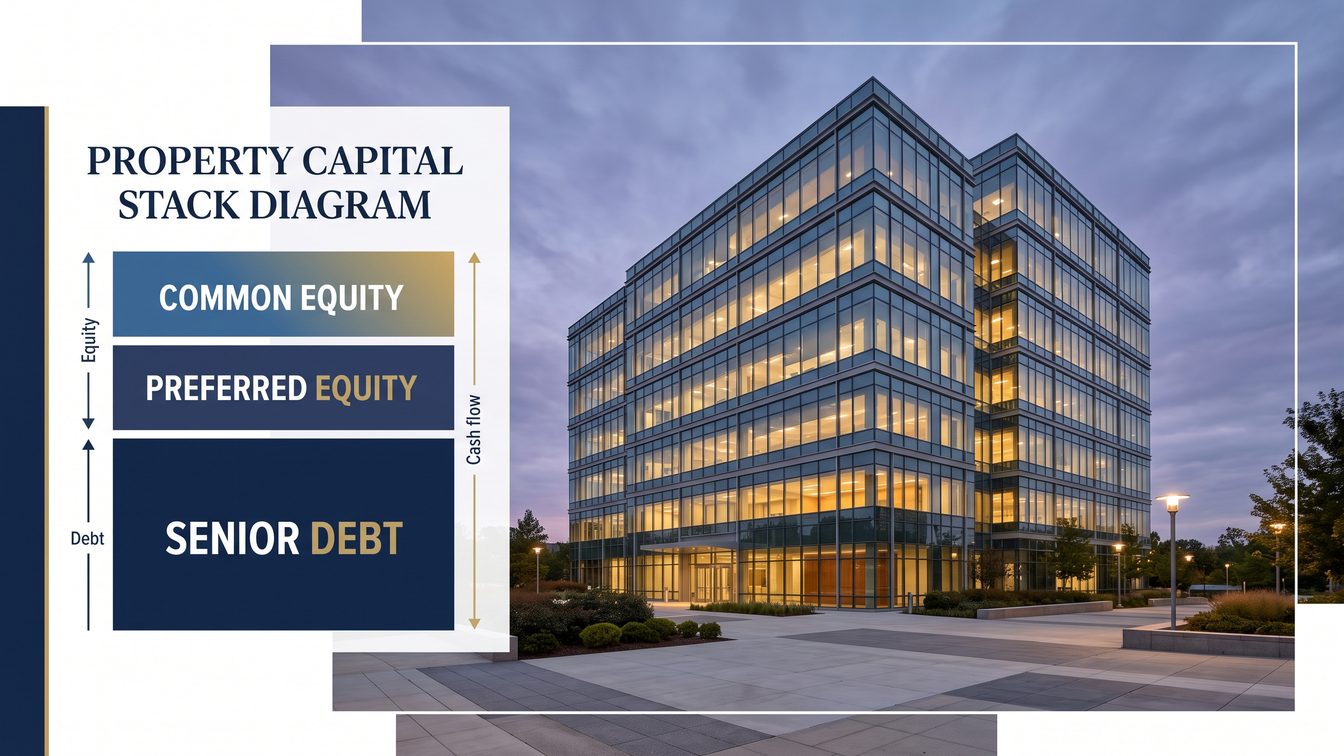
The 2024 Stanford data shows the median number of investors per acquisition is 16. Those investors hold preferred equity. After preferred returns are satisfied, the remaining upside flows to the operator. How much upside depends on the equity structure negotiated at the time of search fund formation — typically, searchers retain 25–30% of fully diluted equity post-acquisition, subject to vesting over the holding period.
At a $2.2M EBITDA entry, a 7.0x purchase multiple, and an exit multiple that holds or expands, that 25–30% equity position becomes the primary compensation event.
The equity: where the real number lives
Stanford tracked equity outcomes for searchers who exited their companies.
Average equity earned per exited entrepreneur: $5.7 million. Median equity earned per exited entrepreneur: $2.25 million.
The gap between average and median tells you something important. The distribution is right-skewed. A small number of exceptional exits — operators who acquired businesses at 5–7x EBITDA and sold them at 9–12x — pull the average up significantly. The median is the honest benchmark.
A successful searcher who closes a deal, operates it through a 6–10 year hold, and executes a clean exit can reasonably expect $2.25 million in equity proceeds. Top-quartile outcomes look substantially better:
- 11% of search fund companies achieve returns greater than 10x (up from 10% in the 2022 study)
- The 2017–2020 cohort is tracking above 50% IRR
- 69% of search fund companies are profitable during the operating phase
These aren't marketing numbers. They're [verified by Stanford GSB's Peter Kelly and Sara Heston](https://www.gsb.stanford.edu/faculty-research/case-studies/2024-search-fund-study), updated annually with real transaction data.
The bottom line: the salary is market rate. The equity is institutional-quality at an individual operator's scale.
What moves the range
The $139,000 search salary and $190,000 CEO compensation are averages and medians. The range is wide. Several factors move it.
What pulls compensation higher:
*Self-funded searches.* No external investors means no investor-imposed salary structure. Self-funded searchers determine their own compensation within what the business can sustain. The trade-off is that self-funded searchers absorb all search costs personally — broken deal expenses, diligence fees, legal costs — with no investor backstop.
*Larger targets.* The search fund buy box runs from approximately $1 million to $8 million EBITDA. Companies at the upper end — $4 million to $8 million EBITDA — generate enough cash flow to support higher CEO compensation without damaging the debt coverage ratios that deal lenders require.
*Strong recurring revenue.* Companies with 60%+ recurring or contractual revenue hold their purchase multiples better. They generate predictable cash flow. Predictable cash flow supports a higher steady-state salary without compressing EBITDA for debt service.
*Track record.* Repeat searchers — operators who have already run one successful acquisition — command better deal economics and often higher compensation. They arrive at the table with demonstrated operating competence.
What caps it:
*Debt service.* Most search fund acquisitions carry leverage — SBA financing, bank debt, or seller financing. Every dollar of excess CEO compensation is EBITDA removed from debt coverage. Investors and lenders both care. Compensation above market creates friction.
*Investor structure.* Traditional search fund investors hold preferred equity with preferred returns — typically 6–8% annually. Until preferred returns are satisfied, the operator's economic position is diluted. Overcompensation during the operating phase shortens the runway to preferred satisfaction and delays the operator's equity participation.
*First-time operator premium.* The 2024 Stanford data shows 79% of searchers are 35 or younger. Most are coming from consulting, finance, or graduate school — not from CEO roles. Market salary for a first-time CEO of a $2 million EBITDA service business runs $150,000 to $200,000. That's the frame investors apply.
The honest comparison
A third-year McKinsey or Bain consultant with an MBA earns $190,000–$220,000 base. A PE associate in a major market earns $200,000–$250,000 with carry that won't vest for eight to twelve years and represents a fraction of fund-level economics.
The search fund path: - Pays less during the 19-month search ($139,000 vs. a comparable corporate role) - Pays comparably during the operating phase ($190,000 median CEO vs. $200,000–$250,000 corporate) - Offers binary equity upside that corporate tracks don't produce at the individual level ($2.25 million median equity exit vs. carry that dilutes across a large fund)
The structural trade is concentration for upside. You're not building a portfolio. You're running one company. That company's outcome determines your financial result.
That's a harder bet psychologically than it looks on paper. 19 months of searching, watching deals fall apart at the LOI stage — roughly 69% of signed LOIs fail to close according to ETA practitioners — and then stepping into an operating role you've never held before. The math works. The psychology is the variable.
For context on what's also possible: check out [what the self-funded search fund model looks like mathematically](/blog/self-funded-search-fund/) and how the capital structure changes the equity outcome.
Running your own numbers
Year 1–2 (search phase): $139,000 average. You need personal savings or secondary income to absorb overhead above that figure. Budget $50,000 per failed LOI in diligence costs — standard reserve for experienced searchers who expect 2–3 broken deals before closing.
Year 3–10 (operating phase): $190,000 median base, growing if you're growing the business. The operating role is where the equity vests.
Exit (median hold: 6–10 years post-acquisition): $2.25 million median equity proceeds. Structured correctly as a capital gain, not ordinary income.
That career arc produces better risk-adjusted total compensation than most corporate tracks — if the acquisition performs. The "if" carries substantial weight.
A clean deal in a business with recurring revenue, healthy margins, no customer concentration, and an owner who is genuinely exiting: 69% of those outcomes are profitable. A deal with hidden key-person risk, concentrated customers, and restated EBITDA after a quality-of-earnings review: the failure rate climbs fast.
The search fund salary question is really a question about process and selection. The compensation is set. The outcome depends on what you buy and how you run it.
The numbers are public. Run them.
---
*Jeff Barnes is a partner at Patriot Growth Capital, a veteran-founded private equity firm headquartered in Atlanta, GA. PGC operates an Acquire / Mentor / Invest model focused on lower-middle-market businesses. 5% of revenue is donated to the veteran community.*
Frequently Asked Questions
What does a search fund operator earn during the search phase before acquiring a company?
The 2024 Stanford GSB Search Fund Study tracks the average search salary at $139,000 per year. The average search runs 19 months. That figure reflects traditional funded searches where investors pay the salary during the search phase. Self-funded searchers set their own compensation within what the acquired business can sustain.
What is the typical CEO salary once a search fund operator closes an acquisition?
The median CEO compensation post-acquisition is $190,000 per year according to the Stanford 2024 data. The businesses searchers acquire have median EBITDA of $2.2 million, making that salary approximately 8.6% of operating earnings. The base salary is not where the primary compensation event happens, equity at exit is.
What does the Stanford data show about equity outcomes for operators who complete an exit?
Stanford tracked equity outcomes for exited search fund entrepreneurs and found an average of $5.7 million and a median of $2.25 million in equity proceeds. The gap between average and median reflects a right-skewed distribution where a small number of exceptional exits pull the average up. The median is the honest benchmark for most operators.
What factors most commonly push search fund operator compensation higher than the median?
Self-funded searches allow operators to set their own compensation without investor-imposed limits. Larger targets in the $4 million to $8 million EBITDA range generate enough cash flow to support higher salaries without damaging debt coverage ratios. Businesses with strong recurring revenue also support more predictable and higher steady-state compensation.