The traditional search fund model has a clean pitch. You raise half a million dollars from a group of investors, spend 19 months searching for a business to buy, then operate it for five to seven years before exiting at a multiple. Investors earn a preferred return. You earn roughly 22% of the equity — if it works.
A different model exists. Most people building in ETA haven't fully run the numbers on it.
The self-funded search fund skips the institutional raise entirely. No investor committee. No preferred return stack sitting above your head. You fund the search out of pocket — savings, consulting income, whatever — find a business, and buy it with a SBA 7(a) loan. You walk in owning 60 to 80 percent of the equity on day one.
That's the trade. More personal risk. More ownership.
How the structure works
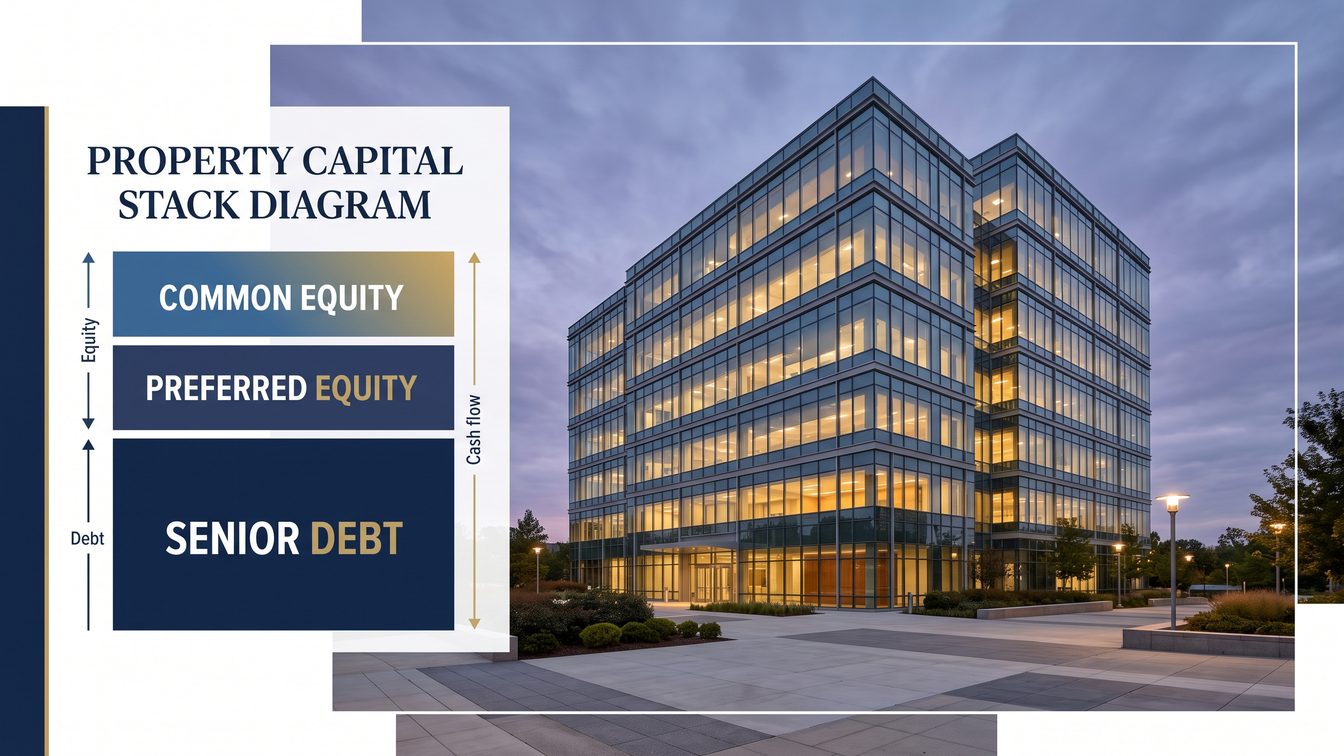
The SBA 7(a) loan is the engine. For a business acquisition, the standard capital stack looks like this: 80% senior debt from an SBA-approved lender, 10% seller note, 10% equity injection from the buyer. That equity injection is the minimum the SBA requires for a change-of-ownership transaction.
On a $2 million acquisition, that's $200,000 out of pocket. On a $4 million deal, it's $400,000. Every individual owning 20% or more of the acquiring entity must personally guarantee the loan.
That personal guarantee is the mechanism that makes the equity split work. Traditional search investors don't guarantee loans. You do. In exchange, they accept economics closer to a venture debt return — not a carry-heavy equity position.
There's no standard self-funded term sheet because there's no standard self-funded deal. But most structures in the $1 million to $10 million enterprise value range support a searcher equity position of 60 to 80 percent. Smaller deals can push higher.
What the data says
The first large-scale study of self-funded search came from Search Investment Group in 2023. They surveyed 1,027 self-funded searchers and received 279 usable responses. Of those, 109 had completed acquisitions.
Key findings:
- 83% of acquisitions closed at below 5.0x EBITDA
- Most targeted EBITDA range: $750,000 to $2,000,000
- Median revenue at acquisition: $2.5 million to $5 million
- Top sector: business services at 34%, followed by manufacturing at 17%
- Searcher equity retained: in the 60 to 80 percent range depending on deal structure
The SIG study's investor return data showed a median IRR of 25 to 30 percent, with 39% of investors reporting returns above 40 percent. Important caveat: 81% of respondents had operated for fewer than three years when surveyed. Most of those returns are unrealized marks, not final outcomes. That caveat matters.
For traditional search funds, [Stanford's 2024 Search Fund Study](https://www.gsb.stanford.edu/faculty-research/case-studies/2024-search-fund-study) provides a longer baseline. The study covers 681 core search funds launched since 1984, through December 31, 2023. Overall investor IRR: 35.1%. Overall MOIC: 4.5x. Exited funds: 42.9% IRR, 6.9x MOIC.
Stanford's 2024 data explicitly excludes self-funded searches. The study notes that self-funded searches are "the most numerous" variant in ETA but that comprehensive data is "virtually impossible to collect."
That tells you something about how fast the model has scaled.
The equity math
Traditional funded search: you raise $500,000 in search capital from roughly 12 investors. You search for 19 months. You acquire a company at a 7.0x EBITDA multiple — the median for the 2022-2023 cohort in Stanford's study. You hold it for five to seven years and exit.
Assuming everything works, the Stanford data says the average traditional searcher earned $6.09 million in equity across their search fund career. Median: $1.98 million.
Self-funded: you own 60 to 80 percent of a business with $750,000 to $2 million in EBITDA. At a 5.0x exit multiple, a $1 million EBITDA business exits at $5 million. Your 75% stake is worth $3.75 million before taxes and transaction costs — on a deal you closed with $200,000 to $400,000 of your own capital.
Neither model is inherently superior. They serve different people in different situations.
Who the self-funded model fits
There are several profiles where self-funded makes more sense than raising traditional search capital.
Operators without institutional pedigree. Stanford MBAs have a pathway into funded search that's well-worn. Operators without that credential often find fundraising difficult regardless of actual operating ability. Self-funded removes the credential gate.
Buyers who want to own more and give away less. If you are confident in your operating ability, the self-funded model rewards that confidence directly. You're not sharing carry with investors who will never set foot in the building.
Veterans with capital access and operating experience. Military operators often have discipline advantages that show up in small business ownership — process adherence, team management under stress, decision-making in ambiguous conditions. The SBA has specific programs for veteran-owned businesses. Lenders recognize the profile.
People targeting the $1 million to $5 million enterprise value range. Traditional search funds have migrated upmarket. Median acquisition price in the 2022-2023 Stanford cohort was $14.4 million. The self-funded model is better adapted to smaller deals where institutional investors aren't competing. If you're comparing options, the [search fund vs. private equity comparison](/blog/search-fund-vs-private-equity) is worth reading before you commit to either path.
Who it doesn't fit
Self-funded search is not for everyone.
The personal guarantee is real exposure. If the business underperforms and the loan goes to default, you are on the hook. Traditional search investors carry preferred equity but no loan liability. They can lose their investment. You can lose more.
Self-funded also requires more personal capital upfront. The 10% equity injection plus due diligence costs, legal fees, and search expenses can total $300,000 to $600,000 before you close a deal. That's not accessible to everyone.
And self-funded searches tend to be lone operations. No investor network to call for operational guidance. No board of directors with relevant experience. You're running the search, managing diligence, and transitioning into the operator role largely on your own.
The market backdrop
Ninety-four traditional core search funds launched in 2023 — the highest single-year count Stanford has ever recorded. International launches added another 111 in 2022-2023 combined. ETA is growing fast across every variant.
The IBBA's Q4 2024 Market Pulse Survey, covering 368 brokers and advisors, reported that 59% saw more signed NDAs in 2024 than in 2023. More buyers are entering the lower middle market. That means competition for deals in the $1 million to $5 million range is increasing.
For self-funded searchers, that creates pressure on deal multiples. Self-funded searches historically close below 5.0x EBITDA. If that compression continues, deal economics may tighten.
The countervailing factor: the supply of businesses for sale is also growing. Baby boomer business owners are approaching retirement in large numbers. Many have businesses that won't attract institutional buyers. They want operators. They want continuity. That's the lane self-funded search occupies.
The bottom line
Self-funded search is a legitimate ETA path with real economics. It's not the right model for everyone. But for operators with capital, operating confidence, and a preference for ownership over institutional backing, the equity math makes a compelling case.
The trade is simple: more personal risk in exchange for more of what you build.
If you're willing to sign your name to a personal guarantee, understand exactly what that signature buys you. Then decide.
Frequently Asked Questions
How does the self-funded search fund model differ from the traditional funded search?
The self-funded model skips the institutional investor raise entirely. The operator funds the search out of personal savings or consulting income, then uses an SBA 7(a) loan to close the acquisition. This typically results in the operator owning 60 to 80% of equity on day one, compared to the roughly 22% equity position common in traditional search fund structures.
What does the standard SBA 7(a) capital stack look like for a self-funded acquisition?
The standard structure is 80% senior debt from an SBA-approved lender, 10% seller note, and 10% equity injection from the buyer. On a $2 million acquisition that means $200,000 out of pocket from the buyer. Every individual owning 20% or more of the acquiring entity must personally guarantee the full loan amount.
What did the Search Investment Group's study find about self-funded search outcomes?
The 2023 SIG study surveyed 1,027 self-funded searchers and received 279 usable responses, of which 109 had completed acquisitions. It found that 83% of acquisitions closed at below 5.0x EBITDA, the most targeted EBITDA range was $750,000 to $2,000,000, and searcher equity retained was in the 60 to 80% range depending on deal structure. The important caveat is that 81% of respondents had operated for fewer than three years, so most returns were unrealized.
Who is the self-funded model least suited for?
The personal guarantee is real exposure. If the business underperforms and the loan defaults, the self-funded operator is personally on the hook in a way that traditional search investors are not. Self-funded also requires $300,000 to $600,000 in personal capital before closing to cover the equity injection, due diligence, legal fees, and search expenses. It is also a largely solo operation without the investor network or board of directors that traditional structures provide.