TL;DR: Acquiring a business through the search fund model follows five defined stages: fundraise, search, acquisition, operations, exit. The median search runs 19 months. You will submit an average of 3.2 LOIs before one closes. Budget $40,000-$100,000 in broken-deal costs per serious LOI that falls through. According to the Yale School of Management's search fund structures analysis, most acquirers choose between three structural paths: traditional, self-funded, or accelerator-backed. Each path changes your capital requirements, your timeline, and how much equity you keep.
Start with the model, not the business
Most people who want to acquire a business start by looking for a business to buy. That is the wrong order of operations.
Before you search, you decide on a structure. The structure determines your capital source, your timeline, your cost basis, and the governance you are walking into at close. Get the structure wrong and you spend 18 months building toward an acquisition that never fits your actual situation.
Three structures exist in the search fund world. Traditional, self-funded, and accelerator-backed. They share a common endpoint. You become CEO of a profitable company. The path and the tradeoffs are distinct.
The three structural paths
Traditional search fund. You raise $400,000-$600,000 from 10-20 investors before you start searching. That capital funds your salary, deal expenses, travel, and legal costs during the search phase. In exchange, investors get the right of first refusal on the acquisition round. If you close a deal, those same investors (typically not all of them) commit acquisition equity. You receive approximately 20-25% of equity at close, vesting over four to five years.
The advantage: institutional support, formal investor relationships, and a network of advisors who have done this before. The cost: accountability to a group, less flexibility on deal size and geography, and a clock running from day one of the search.
Self-funded search. You use your own capital to search. No salary from investors. No fund structure. No investors to update. When you find a deal, you finance the acquisition with bank debt, seller financing, and a small personal equity contribution. The buyer in a self-funded deal often retains up to 100% ownership at close.
The advantage: full autonomy, maximum equity, no investor governance overhead. The cost: you personally guarantee the transaction debt, you pay broken-deal costs out of pocket, and you have no formal advisory network built into the structure. This is the highest-risk path. It is also the most common path for veterans. Operators who have worked under pressure without a support structure and who trust their own judgment.
Accelerator-backed search. A sponsor organization funds your salary during the search and provides equity capital for the acquisition in exchange for board seats and a portion of returns. The accelerator handles logistics: deal templates, lender relationships, legal support. You run the search and operate the business post-close.
The advantage: structured support without the investor-assembly requirement. The cost: equity dilution and shared governance from day one.
What you are actually buying
Search fund operators do not buy any profitable business. They buy a specific profile. Understand the buy box before you run a single search.
EBITDA: $1.5 million to $5 million. The Search Fund Market lifecycle analysis puts the median EBITDA at acquisition at $2.2 million. Large enough to support professional management. Small enough that large private equity firms are not competing for the same deals.
Margins: Minimum 15% EBITDA margin. Median across acquired companies runs 27%. High margins signal pricing power and operational efficiency. Both survive owner transitions.
Revenue quality: Recurring or contractual revenue above 60% of total. Subscriptions, service contracts, maintenance agreements. Predictable cash flows make lender conversations easier and protect against the revenue volatility that comes during leadership transitions.
Industry concentration: Since 2014, search fund acquisitions have concentrated in four sectors: healthcare (25%), business services (25%), software and technology (22%), and tech-enabled services (16%). Shared characteristic across all four: defensible product, sustainable margins, transferable operations.
Growth rate: The median acquired company was growing revenue at 25% at time of acquisition. You are not buying a turnaround. You are buying a working business and accelerating it.
Seller readiness: The current owner must be genuinely ready to leave. Not planning to stay on operationally, not emotionally conflicted about the transition. A seller who wants to maintain control is a risk that compounds every month you are trying to run the business.
The search phase
The median search runs 19 months. That number matters for planning purposes, but the actual range is wide. Some operators close in 10 months. Some take 30. Build your financial plan around 24.
The first three months are infrastructure. Set up your CRM. Build your sourcing network: business brokers, intermediaries, direct outreach to business owners, referral networks. Establish your investor update cadence if you are in a traditional fund structure.
Months four through twelve are active outreach. You are reviewing hundreds of businesses per week. Most are eliminated on first look. Size is wrong, industry does not fit, financials are unreliable, seller is not actually ready to sell. The math is brutal: you will review 100-200 opportunities to surface five to ten serious candidates.
From there, you run management meetings, tour operations, build rapport with ownership. The goal at this stage is not just to evaluate the business. It is to evaluate the seller. The seller's willingness to finance a portion of the deal, to provide a transition period, to be transparent about problems is predictive of how clean the close will be.
According to Search Fund Market, the average searcher submits 3.2 Letters of Intent before closing one deal. Approximately 69% of signed LOIs fail to result in a closed transaction. Budget $40,000-$100,000 in broken-deal costs per serious LOI: legal fees, accounting, quality-of-earnings analysis, travel. These are not recoverable. They are the cost of doing the work correctly.
Financing the acquisition
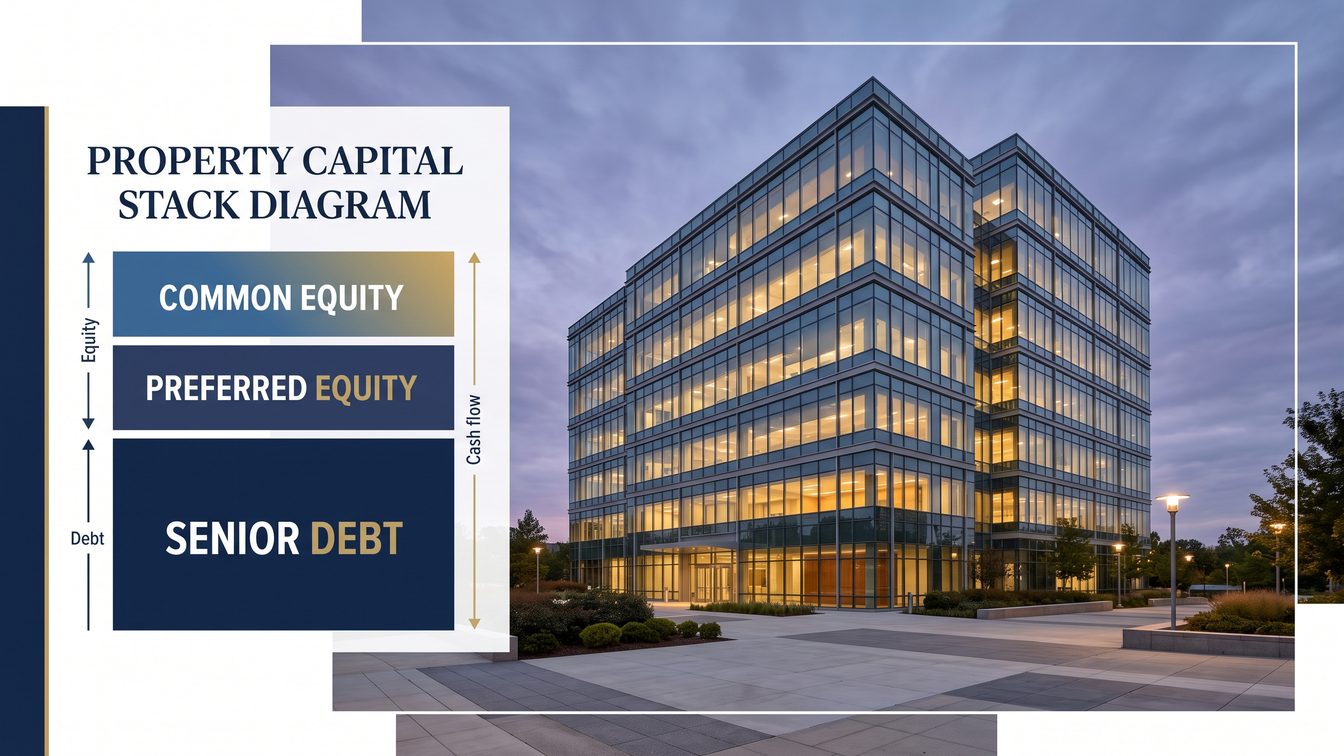
Capital structure for a search fund acquisition typically runs: 50-65% senior debt, 25-40% equity, and 5-15% seller financing. The specific mix depends on the business's cash flow profile, the lender's risk appetite, and how the deal is structured.
For first-time operators, SBA 7(a) is the dominant financing mechanism. It allows buyers to put 10-15% equity down and finance the balance with government-backed debt. The SBA extends repayment windows and absorbs lender risk in ways that conventional bank loans do not, which makes it accessible for operators without a prior acquisition track record.
Seller financing, where the selling owner carries a portion of the purchase price as a promissory note, is increasingly common. It signals genuine seller confidence in the business continuing to perform post-close. It also creates a six-to-twelve-month alignment period where the seller has financial incentive to ensure a smooth transition.
Due diligence runs in parallel with financing. The critical document is a quality-of-earnings (QoE) analysis: a third-party review of the seller's reported earnings. The QoE validates revenue recognition, identifies add-backs, surfaces off-balance-sheet liabilities, and confirms whether the EBITDA the seller is quoting is the EBITDA you are actually buying. Do not skip the QoE to save money. Broken deals caught by the QoE cost far less than bad acquisitions that close without one.
Close to CEO
You close the deal. You become CEO. The first 100 days set the pattern for the next five years.
The EOD instinct at this stage is to immediately identify and neutralize every problem in the organization. That instinct will cost you your best employees and your best customer relationships. The first 100 days are for learning, not reforming. Understand operations, build trust with the team, avoid premature changes.
Year one and two are stabilization. Systematize operations, hire key roles, implement technology that improves margin or reduces owner dependency. Year two through five are growth: executing on revenue acceleration, potential add-on acquisitions, and building the business into an asset worth more than what you paid for it.
INSEAD's ETA Hub describes the search fund model as consistently outperforming traditional investment alternatives including venture capital and private equity on a risk-adjusted basis. The arithmetic makes sense: you are buying a profitable business at a predictable multiple, applying operational improvement, and exiting at a higher multiple. The risk is operator execution, not product-market fit.
What separates closed deals from broken ones
Operators who close acquisitions share three characteristics. They are rigorous about their buy box and do not rationalize exceptions. They build sourcing infrastructure that generates proprietary deal flow rather than competing exclusively through brokers. And they move fast on due diligence, without the hesitation that kills deals on the seller's side.
Sellers choose buyers for reasons beyond price. Certainty of close, demonstrated operator competence, and respect for what they have built matter as much as the purchase multiple. The operator who projects confidence in the diligence process and clarity about the operating plan post-close wins deals that higher bidders lose.
The opportunity in front of the lower middle market right now is structural. Baby boomers own 2.5 million businesses with no identified successors. The search fund model exists specifically to address that gap, putting qualified operators into businesses that would otherwise be sold to less capable buyers or closed entirely.
Patriot Growth Capital's Acquire / Mentor / Invest model was built around this thesis. Learn how we work with veteran operators who are ready to acquire and run lower-middle-market businesses through the complete lifecycle: from acquisition financing through operational improvement and eventual exit.
Jonathan Bates is a partner at Patriot Growth Capital and a former U.S. Navy Explosive Ordnance Disposal (EOD) officer. He focuses on acquisition structuring, due diligence, and operator development.
Frequently Asked Questions
What are the three structural paths for acquiring a business through the search fund model?
The three paths are traditional, self-funded, and accelerator-backed. Traditional search funds raise capital from investors before the search begins and provide a formal advisory network. Self-funded searches use the buyer's own capital and offer full ownership but the highest personal risk. Accelerator-backed searches provide salary and equity capital through a sponsor in exchange for board seats and a share of returns.
How long does the typical search fund acquisition process take?
The median search runs 19 months, though the range runs from 10 to 30 months. Building a financial plan around 24 months is the recommended approach. The average searcher submits 3.2 Letters of Intent before one deal closes.
What does a quality-of-earnings analysis do and why does it matter?
A quality-of-earnings analysis is a third-party review of the seller's reported earnings. It validates revenue recognition, identifies add-backs, surfaces off-balance-sheet liabilities, and confirms whether the EBITDA the seller is quoting is what you are actually buying. Skipping it to save money costs far more when a bad acquisition closes without one.
What EBITDA range and sector focus do most search fund acquisitions target?
Most search fund operators target businesses with EBITDA between $1.5 million and $5 million, with the median at acquisition sitting at $2.2 million. Since 2014, acquisitions have concentrated in four sectors: healthcare, business services, software and technology, and tech-enabled services, each representing roughly 16 to 25 percent of deals.