According to GF Data's 2024 full-year report, 379 private equity-backed transactions closed in the lower-middle-market last year — up 28.9% from the trough year of 2023. A meaningful portion of those deals were management buyouts: the incumbent operators bought the business they already run. No outside searcher. No strategic acquirer. The people who knew every weakness, every customer, and every hidden opportunity became the owners.
That structure is not for every business or every operator. But when the conditions are right, it produces some of the cleanest outcomes in lower-middle-market PE. Here is how it actually works.
What a management buyout is
A management buyout (MBO) is a transaction in which the existing management team acquires a controlling or significant ownership stake in the company they currently operate. The management team personally invests a portion of the equity. The remainder comes from a combination of senior bank debt, private credit, seller financing, and a PE sponsor.
Compare this to a standard leveraged buyout, where the financial sponsor brings in outside operators after close. In an MBO, the operators are the buyers from day one. That distinction matters for underwriting, for culture, and for execution speed.
The capital stack
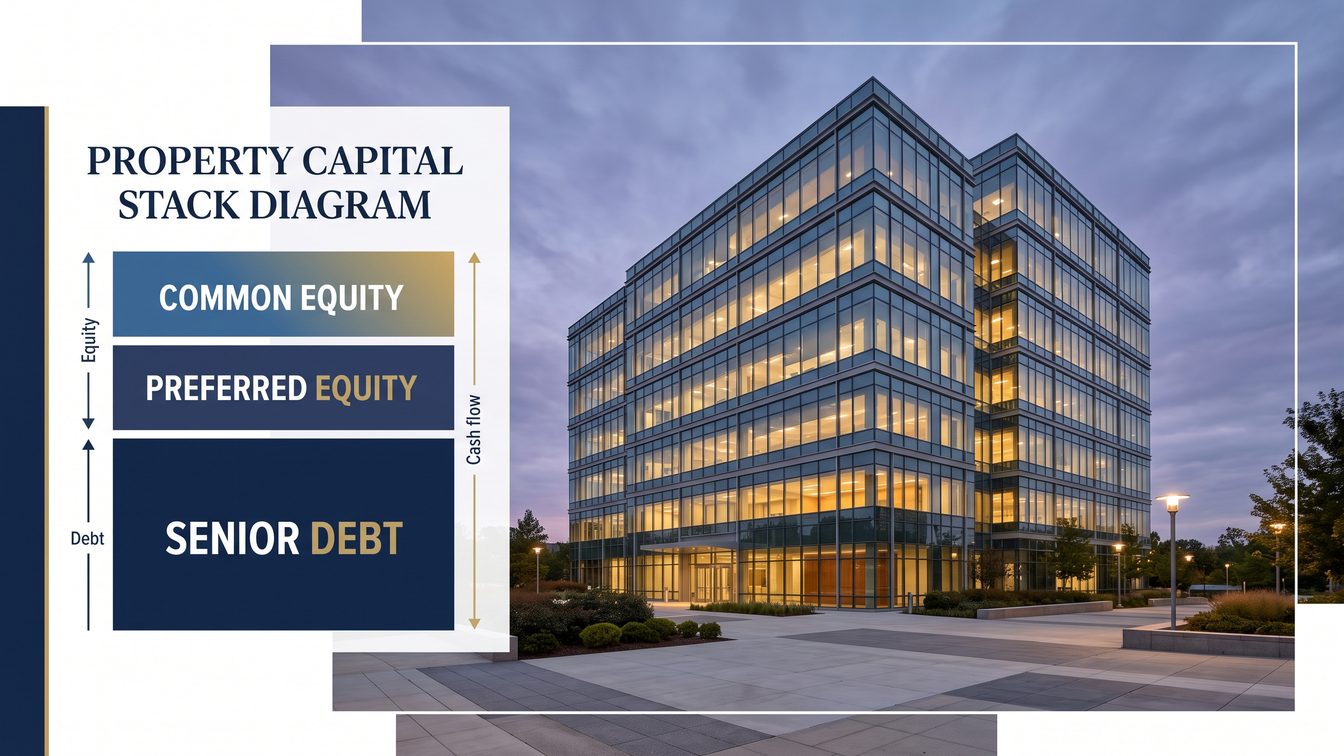
A typical lower-middle-market MBO at a $5M EBITDA business closes at roughly 7x, producing a $35M enterprise value. Here is how the money shows up.
| Layer | Typical amount | Notes |
|---|---|---|
| Senior debt (bank or private credit) | 3.2x–4.5x EBITDA | Private credit now funds 85-86% of LBOs by count (Capstone, 2024) |
| Seller note | 5–25% of deal value | IBBA data: sellers finance under 15% of deal value on average; 84% arrives as cash at close |
| Management equity | 10–30% of purchase price | Personal savings, retirement accounts, rollover equity; minimum 1x annual salary expected per executive |
| PE sponsor equity | Remainder | Typical result: 80% PE, 20% management post-close |
Average leverage in the lower-middle-market sits at 3.2x EBITDA, per J.P. Morgan data, roughly half the 5.9x leverage on deals above $1B. Lenders require a 1.25x–1.5x debt service coverage ratio. That is the floor. Anything below it, the deal does not close.
For smaller deals (EBITDA under $3M, enterprise value roughly $5M–$15M), the SBA 7(a) program plays a significant role. The SBA approved 70,242 7(a) loans totaling $31.1B in FY2024, a 22.5% increase and a 15-year high. The cap is $5M per loan. Rates in early 2026 run around 9.75% on the variable. It is not cheap debt, but it is available and it structures well inside an MBO capital stack when private credit is too expensive for the deal size.
For deals where mezzanine capital is part of the stack, read how mezzanine fits lower-middle-market deals before you build the pro forma.
MBO versus the other two structures
Sellers in the lower-middle-market face roughly three buyer types. Here is where an MBO sits relative to the others.
| Feature | MBO | Search fund / ETA | Strategic buyer |
|---|---|---|---|
| Who operates post-close | Incumbent management | External searcher becomes CEO | Acquirer's team or integration |
| Typical EBITDA range | $2M–$20M | $750K–$2M | Varies; often seeking scale |
| Entry multiple | 6x–8x (market rate) | 4x–6x (below-market possible) | 8x–12x+ (strategic acquisition premium) |
| Diligence speed | Faster — buyers know the business | Full outside diligence | Full diligence; potentially long |
| Seller continuity goal | Maximum | Moderate | Lowest |
| Seller financing typical? | Yes, 5–25% common | Often required | Rarely |
An MBO rarely produces the highest headline price. A strategic buyer who can pay 10x for synergies will beat an MBO at 6.5x. The IBBA reports that deals in the $5M–$50M range attract at least three offers in two-thirds of all transactions. Running a competitive process and treating the MBO as one bid among several is the disciplined path for any seller who wants to know they left nothing on the table.
Where MBOs win is on certainty and legacy. The buyers already know the warts. Diligence moves faster. The culture survives. Employees do not get notified that a stranger is running the company on Monday morning.
If you are still deciding between MBO and search fund structures, the search fund versus PE comparison covers the operator-side tradeoffs directly.
What qualifies management for a PE-backed MBO
PE sponsors and lenders both require the same things before they write a check behind an operator-led buyout.
Track record on the specific business. Not projections. Not what you think the business can do with better marketing. Two to three years of stable EBITDA that a lender can underwrite. If revenue is lumpy or customer concentration is above 30%, expect a valuation haircut or additional covenant protections.
A full bench, not a one-man band. The single biggest red flag in any MBO is a leadership team that cannot run the business for 90 days without the exiting owner. If the founder holds every key customer relationship, every vendor relationship, and every institutional password, the business is not MBO-ready regardless of the EBITDA.
Skin in the game that hurts. Industry norms call for at least 20–30% equity injection from non-debt sources, with management contributing at minimum one year's salary per executive, personally. This is not symbolic. It aligns management incentives with lender risk. The 80/20 split (PE sponsor 80%, management 20%) is the default starting point. Management's economic participation can be amplified through preferred equity structures or option pools, but the cash commitment must be real.
No key-man dependency on the seller. The business must survive the transition. Consulting agreements can bridge 90 to 180 days, but lenders will discount enterprise value if the seller is operationally irreplaceable.
The Shenandoah case: what an LMM MBO looks like in practice
In February 2019, KLH Capital backed a management buyout of Shenandoah Industrial Solutions, a Pompano Beach, Florida company providing mandated stormwater and sanitary infrastructure inspection, cleaning, and trenchless rehabilitation services to public and private sector clients across the Southeast.
Anthony Guglielmi, who had been running the business, became an owner. His own framing: "My prior owners desired liquidity and a path to retirement, and I wanted to bet on myself."
The five-and-a-half-year hold included statewide geographic expansion, new service line additions, a transformative add-on acquisition, and systems implementations that improved labor utilization and back-office operations. KLH exited to GenNx360 Capital Partners in September 2024.
That deal checks every LMM MBO box. Retiring seller who wanted operational continuity. Operator with institutional knowledge and customer relationships. PE sponsor providing capital and scaling infrastructure. Multi-year value creation. Successful exit to a larger fund. Nothing invented. No outside operator brought in to learn the business.
What kills management buyouts
Most MBOs that collapse do so at one of four points.
Valuation gap at the term sheet. Sellers anchor to potential value. Buyers underwrite proven cash flow at a risk-adjusted multiple. The IBBA reports average multiples of 4.3x–6.0x EBITDA for deals in the $5M–$50M range. Sellers who believe their company is worth 9x based on a comparable they read about in a press release will watch the deal die before financing is even arranged.
Capital stack that does not close. SBA caps at $5M. Banks view MBOs with more scrutiny than asset-backed lending. Private credit fills the gap but at wider spreads. If the seller refuses to carry a note and management cannot assemble enough equity, the math does not work regardless of how clean the business is.
Over-leverage in a downturn. A debt load of 3.5x–4.5x EBITDA leaves a thin cushion. One large customer loss, one supply chain disruption, one flat year triggers covenant violations. Management teams who have never owned a leveraged business underestimate how fast that feels different from running an unleveraged operation.
Management capability gaps, exposed post-close. Running a P&L as an employee is not the same as owning one. The CFO function, capital allocation, board reporting, and M&A diligence are typically new responsibilities for a management team that has spent their careers inside a single operating company. PE sponsors who back MBOs know this. The first 100 days almost always include hiring or promoting into finance and systems roles that were previously handled informally by the founder.
Returns and the LMM advantage
The lower-middle-market outperforms the large-cap end of PE by a meaningful margin. Upper-quartile LMM funds have delivered 25.6% net IRR versus 21.6% for large-cap funds, per CAIA analysis. Realized multiples in the mid-market average 3.75x versus 3.2x for large-cap deals.
The mechanism is straightforward. Entry multiples average 7.2x in the LMM (GF Data 2024 full-year average) versus 12x–15x at the top end of the market. Operational improvements that move a $5M EBITDA business to $8M create proportionally more value at a 7x exit multiple than the same absolute improvement at a 14x multiple. There is simply more room to build.
For more on why the lower-middle-market produces those returns, the structural reasons are worth understanding before you structure a deal.
The one question every MBO operator should answer first
Before any management team pursues a buyout, one question clarifies everything: can this business service debt for 36 months if revenue drops 20%?
Run the stress test with actual numbers. Covenant thresholds. Debt service requirements. Operating cash flow under a realistic downside scenario. If the answer is no, the capital structure needs to change before the deal closes — not after the first bad quarter.
An MBO is the right structure for operators who have earned the right to own what they built. The numbers support it. The case studies support it. The mistake is confusing operating competence with ownership readiness. They are related, but they are not the same thing.
Disclaimer: Patriot Growth Capital does not provide investment advice or broker-dealer services. This article is for educational purposes only. All investment decisions involve risk. Past performance does not guarantee future results.
Frequently Asked Questions
What is a management buyout and how does the capital typically get structured?
A management buyout is a transaction in which the existing management team acquires a controlling or significant ownership stake in the company they already operate. The capital stack in a typical lower-middle-market MBO includes senior bank debt or private credit at 3.2x to 4.5x EBITDA, a seller note covering 5 to 25 percent of deal value, and management equity of 10 to 30 percent of the purchase price, with PE sponsor equity filling the remainder.
How do MBO outcomes differ from strategic buyer or search fund deals for a seller?
A strategic buyer typically pays the highest headline price, often 8x to 12x or more, while an MBO at market rate runs 6x to 8x and a search fund often comes in at 4x to 6x. The MBO wins on certainty and cultural continuity: buyers already know the business, diligence moves faster, and employees are not notified that a stranger is running the company on Monday morning. For sellers who prioritize legacy and operational continuity over maximum price, an MBO often produces the cleanest outcome.
What are the most common reasons management buyouts collapse?
The four most common failure points are a valuation gap at the term sheet stage, a capital stack that does not close when seller financing is refused and management cannot assemble enough equity, over-leverage that leaves too thin a cushion against a flat year or customer loss, and management capability gaps exposed post-close when running a leveraged P&L turns out to differ significantly from running an unleveraged operation as an employee.
What minimum financial requirements must a business meet for an MBO to close?
Lenders require a minimum debt service coverage ratio of 1.25x to 1.5x EBITDA. If the business cannot generate $1.25 for every dollar of annual debt service, the deal does not close. Management is also expected to contribute at least one year's salary per executive from personal savings, retirement accounts, or rollover equity, with industry norms calling for at least 20 to 30 percent equity injection from non-debt sources.