Two firms called you this week. One offered a minority stake and wants to ride your growth. The other wants to buy control and put debt on your balance sheet. Both call themselves private equity. They are not the same thing.
In 2023, more than $100 billion was invested in growth equity, per a 2025 Georgetown University study on private capital strategies. Growth equity has become one of the fastest-growing categories inside the private equity universe. At the same time, lower middle market buyout activity remains the dominant deal structure for businesses generating $2M to $10M in EBITDA. If someone is circling your business, you need to know which type of firm is at the door and what they actually want.
Both are private equity. The mechanics are completely different.
At the broadest level, growth equity is a subset of private equity. PitchBook, Preqin, and Cambridge Associates all categorize it under the private equity umbrella. So when someone says "private equity is interested in my company," they could mean a buyout fund, a growth equity fund, a venture firm doing later-stage rounds, or a family office doing minority recap deals.
The practical differences matter. Here is the core distinction:
- Growth equity: Minority stake (typically 10% to 40%), little or no debt, targets companies growing 20% to 100% annually, hold period 5 to 7 years, target return 3x to 5x MOIC.
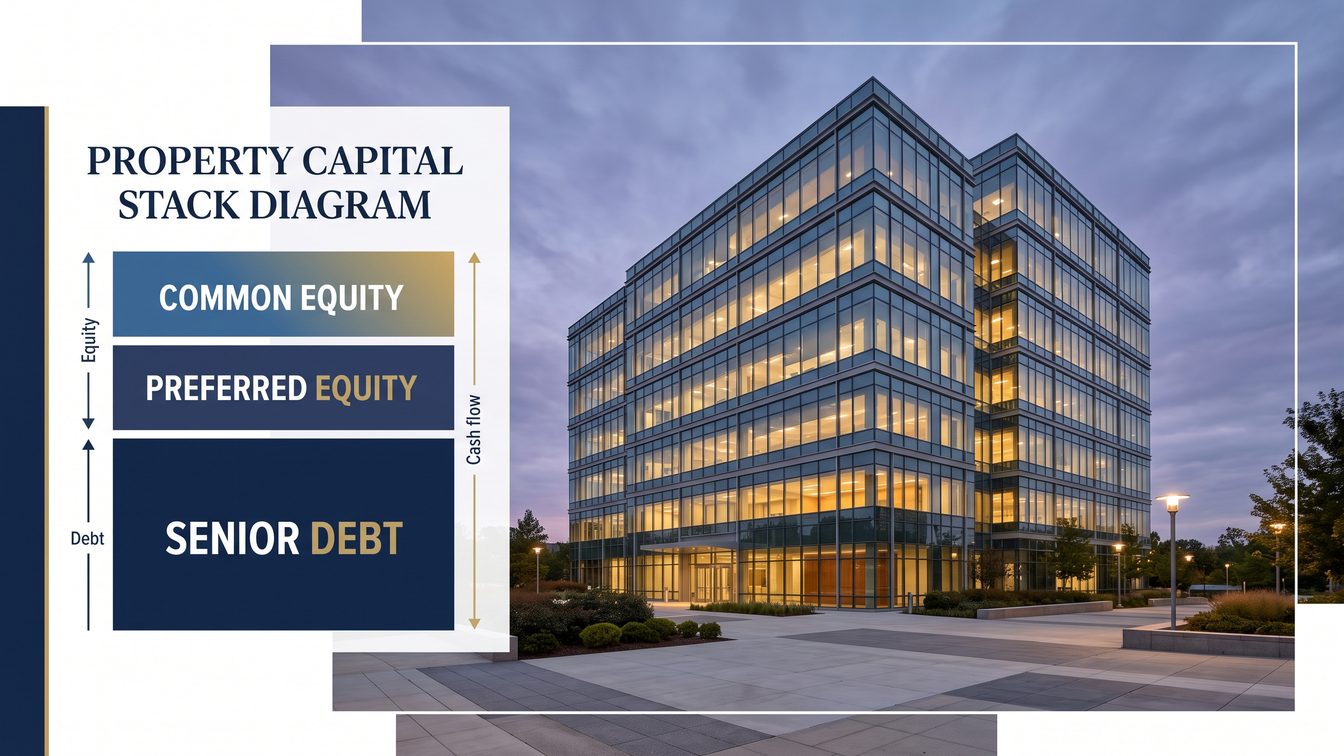
- Buyout (traditional PE): Majority or full control (70% to 100%), heavy leverage (50% to 65% debt on the purchase price), targets mature companies with stable cash flow, hold period 3 to 6 years, target return 2.5x to 3x MOIC.
Same asset class. Different deal mechanics. Different implications for you as an owner.
The debt question explains most of what you need to know.
Buyout funds use debt as a primary return lever. A firm buys your company using 50% to 65% borrowed capital. That debt sits on your company's balance sheet. The business services it from operating cash flow. According to the Bain 2025 Global Private Equity Report, buyout returns break down roughly as follows: debt paydown accounts for 25% to 40% of value creation, EBITDA growth 30% to 45%, and multiple expansion 15% to 35%.
Take a simple example. A buyout fund acquires your company at a $20M enterprise value. They put in $8M equity and $12M debt. Over five years, the company pays down $8M of that debt. Even if EBITDA stays flat, the equity value has grown from $8M to $16M — a 2x return without any operational improvement. That is the mechanical advantage of leverage.
Growth equity funds do not use that lever. Most growth equity checks are 100% equity. Returns come almost entirely from revenue and EBITDA growth (75% to 90% of value creation), with a smaller contribution from multiple expansion as the company matures during the hold period. Growth equity investors are betting that your business will be substantially larger in five years and will command a higher exit multiple because of that size.
For you as the operator: a buyout deal means your company carries new debt obligations. A growth equity deal does not.
Who qualifies for each type of capital.
Growth equity firms target companies in a specific zone: generating real revenue (typically $10M to $200M), growing at 20% or more annually, and either barely profitable or moving toward profitability. They are looking for product-market fit that is proven but scale that is not yet achieved. Software, services, healthcare services, and tech-enabled businesses dominate growth equity deal flow.
Buyout firms target a different profile. Lower middle market PE funds, which is where Patriot Growth Capital operates, typically look for companies with $2M to $10M in EBITDA, growing 5% to 15% annually, with predictable free cash flow that can service acquisition debt. The business does not have to be hypergrowth. It has to be stable, defensible, and capable of generating cash. Per the Pepperdine 2025 Private Capital Markets Report, private equity investors report median expected IRRs of approximately 25% for companies in the $1M to $5M EBITDA range.
A company growing at 50% annually with $3M in EBITDA is probably more attractive to a growth equity firm than a buyout fund. A company growing at 8% with $4M in EBITDA and strong free cash flow is the core buyout target. Both are valuable businesses. They attract different capital.
Control: what changes after the deal closes.
This is where the difference becomes personal.
Growth equity firms take minority stakes. You keep majority ownership. You keep your board seat. You often remain CEO. The growth equity investor adds one or two board seats, provides strategic guidance, and has contractual protections (drag-along rights, anti-dilution provisions) but cannot force a sale or replace you without triggering those protections. The bet is that you, the founder or operator, will execute the growth plan.
Buyout funds take majority or full control. They may keep you as CEO if you are integral to the business, but the board composition shifts. They set compensation structures, approve major capital decisions, and typically replace leadership within 24 months of acquisition when performance requires it. This is not a criticism. It is the operational model. Buyout GPs are accountable to their LPs for returns, and they act accordingly.
For veteran-owned businesses and founder-operated companies, this distinction matters operationally and culturally. If you want to stay and run the company, a growth equity deal preserves more autonomy. If you want liquidity and a defined exit path, a buyout deal provides that structure.
See how lower middle market PE firms approach this ownership question differently from large-cap buyout funds.
Returns: what the data actually shows.
Both strategies have delivered comparable net returns over the past decade, which surprises most operators who assume buyout PE consistently outperforms. According to Cambridge Associates December 2025 benchmark data, US buyout funds vintage 2013 to 2020 delivered 15.2% pooled net IRR and 1.9x TVPI. US growth equity funds over the same vintage period delivered 14.8% net IRR and 1.8x TVPI.
The spread is narrow. The outcome dispersion is not.
Top-quartile buyout funds returned 21.4% net IRR vs. a median of 13.6% (a 780 basis point spread). Top-quartile growth equity funds returned 23.9% net IRR vs. a median of 11.8% (a 1,210 basis point spread). Manager selection matters more in growth equity because company-level outcomes are more dispersed. One missed growth forecast compresses the exit multiple and cuts the return significantly without the debt-paydown floor that cushions buyout returns.
The Georgetown University study found no statistically significant difference in risk-adjusted returns between growth equity and buyout after controlling for fund size, vintage year, and geography. What the study did confirm: later-sequence funds (more experienced GPs) consistently outperformed earlier-sequence funds, and funds headquartered in major financial centers outperformed those elsewhere.
What this means when a firm calls on your business.
Ask three questions when a PE firm reaches out:
- What stake are they targeting? Minority (under 50%) suggests growth equity or a recapitalization structure. Majority (70% or more) is a buyout.
- What is their debt plan? Ask directly: will they place acquisition debt on the company? Growth equity deals typically answer no. Buyout deals answer yes, and the amount matters.
- What is their thesis for your company? A growth equity firm will talk about your growth rate and market opportunity. A buyout firm will talk about your EBITDA, cash flow stability, and operational improvement potential.
Neither structure is inherently better. Both can be the right outcome depending on what you want from the transaction and where your business is in its lifecycle.
If you are generating $2M to $10M in EBITDA, running a profitable business, and thinking about an exit or a partial liquidity event, you are likely in buyout territory. If you are growing fast, have limited profitability, and need capital to scale without ceding control, growth equity may be the right conversation.
The takeaway.
Growth equity and private equity buyout both call themselves private equity. The deal mechanics, the capital structure, the control implications, and the return drivers are fundamentally different. The distinction comes down to one variable: debt. Buyout funds use it as a core return lever. Growth equity funds do not.
Know which type of firm you are sitting across from. It determines how the deal gets structured, how much you take off the table, and whether you will still be running your company in five years. Ask the three questions above before any term sheet discussion goes further.
Jeff Barnes is a partner at Patriot Growth Capital, a veteran-founded private equity firm focused on lower-middle-market acquisitions. PGC does not provide investment advice. This article is for educational purposes only.
Frequently Asked Questions
What is the core difference between growth equity and a buyout fund?
The core difference is debt. Buyout funds use 50% to 65% borrowed capital placed on the acquired company's balance sheet. Growth equity funds invest 100% equity with little or no acquisition debt. That single variable changes how returns are generated and what happens to your business after the deal closes.
What kind of ownership stake does a growth equity investor typically take?
Growth equity investors take minority stakes, typically 10% to 40%. You keep majority ownership, your board seat, and often remain as CEO. The investor adds one or two board seats and holds contractual protections but cannot force a sale or replace you without triggering those provisions.
What revenue and growth profile does a growth equity firm target?
Growth equity firms target companies generating $10M to $200M in revenue, growing at 20% or more annually, and either barely profitable or moving toward profitability. Software, services, healthcare services, and tech-enabled businesses make up most of their deal flow.
How do net returns compare between growth equity and buyout funds?
The returns are close. US buyout funds from the 2013 to 2020 vintage period delivered 15.2% pooled net IRR, while US growth equity funds delivered 14.8% net IRR over the same period. The bigger difference is outcome dispersion: top-quartile growth equity funds showed a 1,210 basis point spread over median, compared to 780 basis points for buyout.