TL;DR: You don't need $1M in personal capital to acquire a cash-flowing business. The SBA 7(a) program funded roughly 70,000 business acquisitions in FY2024 averaging $443,000 each, per SBA.gov. Structure the deal right with SBA debt, a seller note, and a small equity injection, and you can close a $2M acquisition for $150K to $200K out of pocket. Here is how.
Most aspiring owner-operators price themselves out before they start. They look at a $2M business, see the asking price, and walk away. That is the wrong frame. The purchase price and the capital you need to close are two different numbers. They don't have to be close to each other.
The acquisition financing stack is what separates the operators who close from those who watch from the sidelines. Get it right, and a qualified buyer can control a profitable business with a fraction of its purchase price. Get it wrong, or skip the conversation entirely because you assume you don't have enough capital, and you walk away from an asset that generates more annual cash flow than most jobs pay.
Four realistic paths exist for acquiring a small business with limited personal capital. Each one has a different risk and equity trade-off. Know which one fits your situation before you approach a seller or a bank.
Path 1: Traditional Search Fund
The traditional search fund was designed for operators who lack personal capital. You raise $400K to $950K from 10 to 15 investors to fund a two-year search. That capital pays your salary — typically $100K to $120K annually — plus deal costs, legal fees, and due diligence expenses. No personal capital required in the search phase.
When you find a target, you return to those same investors for acquisition capital. They fund the deal. You operate the business as CEO for five to ten years and take it to exit.
The 2024 Stanford GSB Search Fund Study covers 681 first-time search funds formed since 1984. Traditional funded searchers have produced average investor IRRs of approximately 35%. That is the attraction for investors. Your attraction: you get paid to search, carry no acquisition debt personally, and enter a coached ecosystem of experienced operators and board members who have done this before.
The trade-off is equity. You end up owning roughly 10 to 30% of the business at close, depending on step-up provisions. The investors own the rest. They also hold preferred return hurdles and board seats. If control matters more than salary, this path may not fit. If a proven support structure is the priority, it is one of the most capital-efficient leadership tracks available.
Path 2: Self-Funded Search
The self-funded search flips the equity equation. No investor syndicate. No salary during the search phase. No board with removal rights. You fund the search out of pocket, typically $30K to $100K per year in hard costs, and you keep 90 to 100% of the company equity at close.
The acquisition financing structure is what makes this work with minimal personal capital:
- 80% SBA 7(a) loan: government-backed debt covering up to $5M of the purchase price, 10-year term, currently priced at approximately Prime plus 2.75 to 3.00%
- 10% seller note: the seller carries a subordinated promissory note, typically 5 to 7% interest over 5 years, often on standby for the first 12 to 24 months per SBA SOP 50 10 8 requirements
- 10% buyer equity injection: your personal cash into the transaction
On a $2M acquisition, that equity injection is $200K. On a $1.2M deal where the lender permits the seller note to count toward the equity injection requirement, you can close for $25K to $35K out of pocket. This is why the SBA 7(a) program is the backbone of self-funded acquisitions: the government guarantee allows buyers to control meaningful businesses with far less personal capital than conventional financing requires.
The risk in this model is direct. The SBA requires a full personal guarantee from all owners with 20% or more equity. If you own 100% of the business, you are personally guaranteeing the full loan balance. That is the primary exposure of the self-funded path, not equity dilution. Run the debt service coverage calculation before you sign anything.
Path 3: SBA Plus Seller Note
For deals in the $1M to $5M range, the dominant structure in practice is SBA 7(a) combined with seller financing. The seller carries a note, typically 10 to 25% of the purchase price, that stacks onto the SBA debt and reduces the buyer's required equity injection.
Per the Pepperdine University Private Capital Markets Report (2025), the median seller note in deals under $5M carries a 6.2% interest rate, 5-year term, and represents 25% of the purchase price. The SBA requires this note to be fully subordinated to the bank loan and typically includes a standby period of 12 to 24 months during which the seller receives no payments.
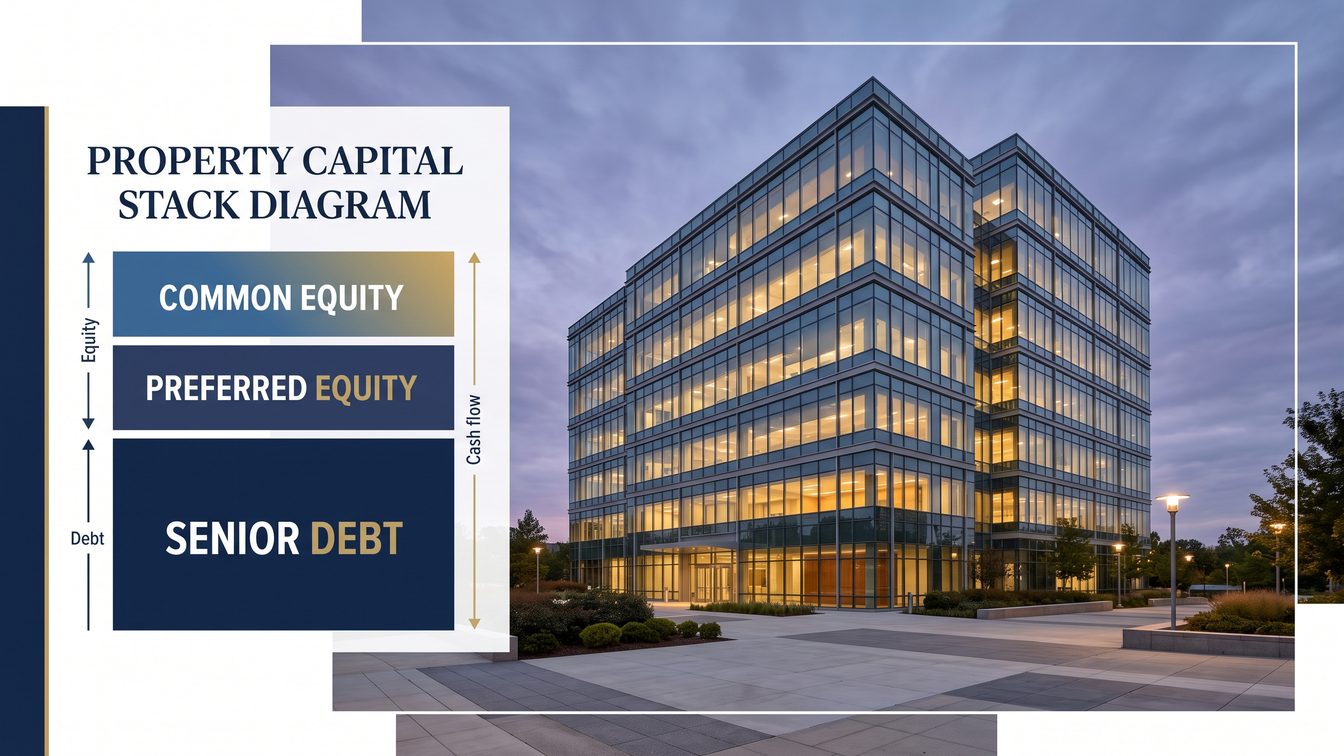
Here is how the capital stack looks on a typical $1.5M transaction:
- SBA 7(a) loan: $1.05M (70%)
- Seller note: $300K (20%) on standby per SBA requirements
- Buyer equity injection: $150K (10%)
Annual debt service on a $1.05M SBA loan at 10.5% over 10 years is approximately $137K. If the business generates $300K in adjusted EBITDA, debt service coverage sits at 2.19x, well above the 1.25x minimum most SBA lenders require. The deal works.
The seller gets 80% of the purchase price in cash at closing: SBA proceeds plus the buyer's equity injection. They carry the remaining 20% as a note. Most sellers will negotiate this structure once they understand it. Most won't bring it up unless you ask. You have to propose it.
Path 4: Pure Seller Financing
100% seller financing exists but is uncommon above $200K. It typically appears in distressed situations, family business transfers, or cases where the business has complexity that disqualifies it from SBA underwriting.
The seller carrying 100% of the note means they absorb all the credit risk. Most sellers with an exit-ready business won't accept that exposure. Those who do typically require a higher purchase price, a premium interest rate of 8 to 10%, and extensive collateral including a personal guarantee. The premium can make the deal structure less attractive than the headline price suggests. Run the total cost of capital before proceeding.
What "No Money" Actually Means
None of these paths are truly zero-dollar. They are low-personal-capital paths relative to the asset being acquired.
The honest liquidity requirement for a regional self-funded search, covering 18 months of search plus one dead deal plus the equity injection at close, is $100K to $200K depending on deal size and cost of living. That is real capital. It is also a fraction of what most people assume when they consider buying a $2M business.
The SBA approved 70,242 7(a) loans in FY2024 at an average of $443,097, representing roughly $31 billion in program volume. This is not a niche strategy. It is the primary financing mechanism for small business acquisition in the United States, and it exists specifically because Congress decided that capital should not be the reason qualified operators can't buy profitable businesses.
Veterans bring structural advantages to this model. The discipline required to run an 18 to 24-month search with no guaranteed outcome, sourcing deals, qualifying sellers, managing due diligence, and negotiating terms without a full team behind you, mirrors exactly what military operators do routinely. The self-funded search doesn't reward financial backing. It rewards process discipline, pattern recognition under pressure, and the willingness to make decisions with incomplete information.
That combination is what Patriot Growth Capital is built around. The distinction between search fund and traditional PE isn't only capital structure. It is who operates the business after the close. We back operators who have already proven they can function under that kind of pressure.
Three Questions Before You Start
Before approaching a lender or a seller, work through these:
- What is your personal guarantee tolerance? SBA debt requires it. If the business cash flow fails to service the note and something goes wrong, you are personally liable. You need to be at peace with that exposure before the letter of intent is signed.
- What is the business's actual debt service coverage? Take adjusted EBITDA minus owner compensation you would require. Divide by total annual debt service including the seller note once it comes off standby. That number needs to be above 1.25x. If it is not, the deal does not pencil regardless of how you structure the financing.
- Can the seller explain where the cash flow comes from? Not the accounting. The actual customer relationships, contracts, and recurring revenue that generate the earnings. If the seller cannot answer this cleanly, due diligence will surface surprises that kill the deal or kill the business after close.
The opportunity to own a cash-flowing business without millions in personal capital is real. The SBA program, combined with a structured seller note, is proven financing for this asset class. What separates operators who close from those who don't is not capital access. It is the discipline to run the process correctly and the judgment to walk away from deals that don't work.
That is the pattern that earns ownership.
Frequently Asked Questions
Can you really buy a business with no money down?
Rarely literally zero. But the capital you need to close and the purchase price are two different numbers. On a $1.2M deal where the lender permits a standby seller note to count toward the equity injection, buyers have closed for $25,000 to $35,000 out of pocket. On a $2M acquisition, the typical buyer equity injection is about $200,000, roughly 10% of the price rather than the whole thing.
How much cash do you actually need for a self-funded search?
The honest liquidity requirement for an 18-month regional self-funded search, covering living expenses, one dead deal, and the equity injection at close, is $100,000 to $200,000 depending on deal size and cost of living.
What does the SBA 7(a) acquisition capital stack look like?
A common structure is an 80% SBA 7(a) loan (up to $5M, 10-year term, roughly Prime plus 2.75 to 3.00%), a 10% seller note (5 to 7% over 5 years, often on standby for 12 to 24 months), and a 10% buyer equity injection. On a $2M deal that injection is about $200,000.
What is the biggest risk of buying a business with SBA debt?
The personal guarantee. The SBA requires a full personal guarantee from any owner with 20% or more equity, so a 100% owner is personally liable for the entire loan balance. Run the debt service coverage calculation, targeting above 1.25x, before you sign anything.