TL;DR: The search fund model is a two-stage acquisition vehicle where one or two operators raise capital to search for a private business, buy it, and run it for five to seven years. According to Stanford GSB's 2024 Search Fund Study, 681 US and Canadian funds have produced a 35.1% aggregate IRR and 4.5x ROI since 1984. The model rewards patience. It punishes shortcuts.
Two stages, one outcome
Most people hear "search fund" and picture a startup. It's the opposite. A search fund is a vehicle for buying a business that already works. The goal is ownership, not invention.
Stage one: raise search capital to pay yourself a salary while you find the right company. Stage two: raise acquisition capital to buy it. You operate it for five to seven years, then exit.
That's the whole model. The complexity lives in the details.
Stage one: the search
A searcher typically raises $500,000 to $750,000 in search capital from a syndicate of 10 to 15 investors. This capital covers living expenses and operating costs for 18 to 24 months. Median raise time: three months, per the Stanford data.
The salary isn't lavish. Most searchers earn $150,000 to $175,000 per year during the search phase. The real compensation comes later, in equity.
You spend those 18 to 24 months doing one thing: finding a business worth buying. You screen hundreds of targets. You submit dozens of letters of intent. You close on one.
Acquisition rate since 2014 has held steady at approximately 57%. Nearly half of searchers who raise a fund never close a deal. That's not a failure of the model. It's the model working correctly. The filter is intentional.
What you're looking for
The target profile is tight. Per the Stanford 2024 study, the median acquired company has an EBITDA margin of 27%, a growth rate of 25%, and 34 employees. Median purchase price: $14.4 million at a 7.0x EBITDA multiple.
That's a profitable, growing, small business with a retiring owner. Not a turnaround. Not a startup. Not a distressed asset.
The search fund model works because these businesses exist in enormous numbers. The Silver Tsunami — 10,000 baby boomers retiring per day — means there are tens of thousands of quality businesses looking for a successor. Most will never go through a formal M&A process.
That's where the searcher gets an edge. Proprietary deal flow. Relationships with sellers who want continuity, not just a check. A buyer who will run the business, not strip it.
Stage two: the capital stack
Once you have a signed letter of intent, you go back to your investors and raise acquisition capital. This is a different conversation than the search raise.
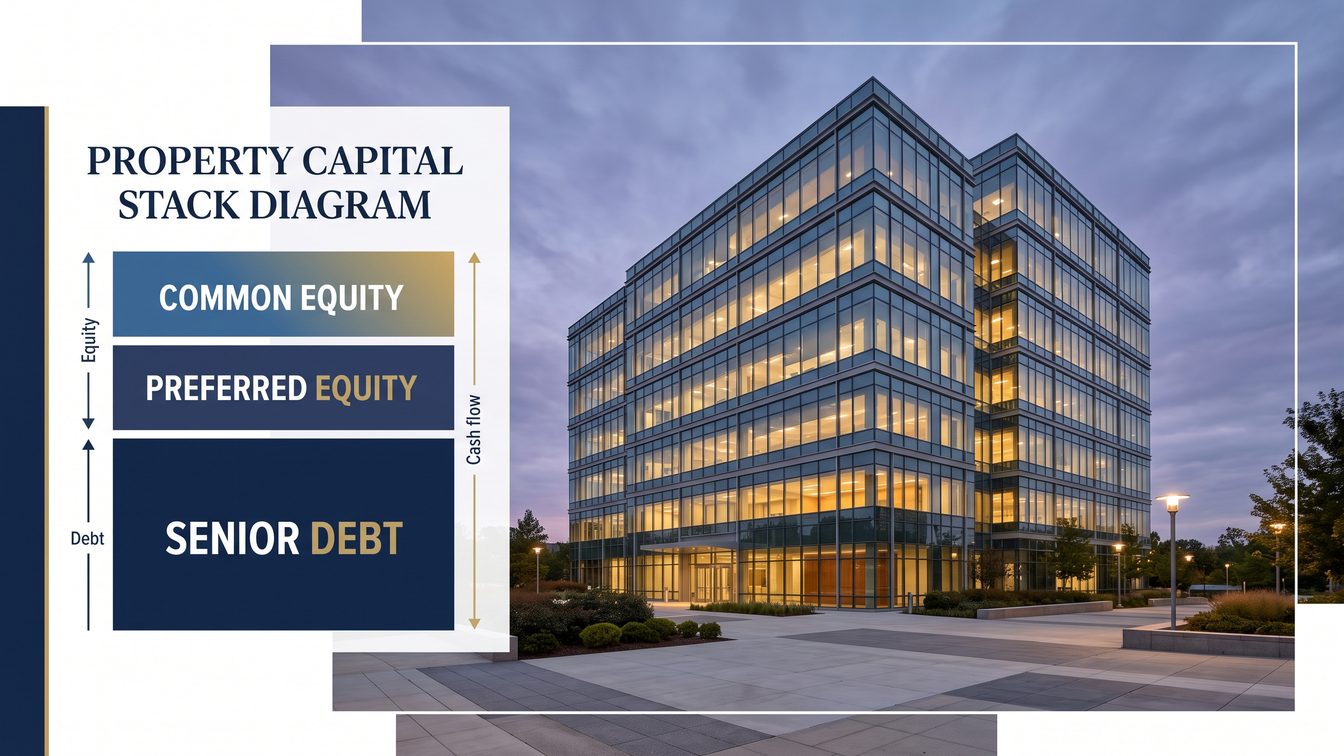
A typical acquisition capital stack looks like this:
- Senior debt: 30 to 40% of purchase price
- Investor equity: 50 to 60%
- Seller note or earnout: 10 to 20%
Your original search investors get preferential treatment. Their search capital converts into acquisition equity at a 150% step-up, rewarding them for taking the earliest risk. They also receive pro rata rights on the acquisition round.
New investors can come in at the acquisition stage, but without the conversion premium. The search investors own the priority position they earned by writing checks before you had a deal.
The debt is real. You're running a debt-financed business. Debt service coverage ratios matter. Covenants matter. The first year of ownership is largely about understanding what you actually bought versus what you thought you bought.
You can learn more about how acquisition financing is structured in our breakdown of search fund deal structure.
Operator equity: how you get paid
The searcher enters the deal with 20 to 30% equity, depending on the negotiation. That equity vests over time, tied to performance hurdles and hold period. You don't get it all on day one.
The Stanford 2024 data on operator compensation is clear. Entrepreneurs still operating their acquired companies have earned an average of $6.09 million in equity, with a median of $1.98 million. Entrepreneurs who have exited: average $5.7 million, median $2.25 million.
These are not outliers. They are the median and average across a dataset of 681 funds. The model delivers meaningful equity to operators who execute.
That said, a significant portion of searchers don't get there. The acquisition rate is 57%. Of those who acquire, some companies fail. The Stanford data shows an increase in the percentage of acquisitions reporting a loss over the last ten years.
The model is not a guaranteed path. It's a high-upside, high-effort structure for operators who have the judgment to pick the right business and the discipline to run it.
Investor economics: what the LP sees
Traditional search fund investors are not passive LPs. They're active mentors. The typical syndicate has 12 investors per fund. These are often former operators, PE professionals, or experienced searchers who have done it themselves.
The aggregate returns since 1984: 35.1% IRR, 4.5x ROI. For exited funds, IRR jumps to 42.9%. Several 2022 to 2023 exits drove that figure upward.
The 2017 to 2020 acquisition cohort is on track for over 50% IRR, with 44% of that group already having exited. The newer cohorts, 2021 to 2022, sit at 23% IRR and 1.5x ROI, but they're early. Most hold periods run five to seven years.
Investor capital committed across 2022 and 2023 totaled $682 million. The model attracts serious money because the returns are real and the deal structures protect downside through preferred equity and step-up provisions.
The risk is not that the model doesn't work. The risk is selecting the wrong searcher. Investor-mentors who pick disciplined, experienced operators with clear target criteria consistently outperform those who bet on the pitch alone.
Why this model grew
In 2023, 94 new core search funds launched. That's a record. Five years ago, the number was closer to 40.
Three things drove the growth. First, business schools added ETA programs. In 2023, 48% of new searchers had taken an ETA class, up from 37% in 2022. The model now has a curriculum.
Second, the Silver Tsunami created supply. More owners are looking for exits than at any point in the history of American small business. The demand side grew too, but supply is substantial.
Third, the data became undeniable. The Stanford study series, now in its 2024 edition, gives investors and searchers a track record that most private equity strategies can't match at comparable deal sizes. 35.1% IRR is not a marketing claim. It's a 40-year dataset.
The variants worth knowing
The traditional model has spawned alternatives. The self-funded search, which Patriot Growth Capital tracks closely, removes the search capital raise entirely. The operator uses personal savings, a bridge loan, or deferred compensation to fund the search period. Equity stays concentrated. The tradeoff: you absorb the salary risk yourself, but you own more of the outcome.
Accelerators are another variant. Organizations like Trilogy Search Partners and Search Fund Accelerator provide infrastructure and mentorship in exchange for a small equity slice, reducing friction for first-time searchers who lack the network to build a syndicate from scratch.
Partnered searches, where two operators co-search and co-operate, ran at 19% of new searches in 2022 and 2023. Partner searches have produced an IRR of 40.5%, compared to 31.7% for solo searches, per the Stanford data.
What breaks the model
Most search fund failures come from four places.
Wrong business. A company that looked clean at diligence revealed concentration risk, key-man dependency, or margin compression in year one. The screening criteria exist for a reason. Ignoring them costs equity.
Wrong operator. The skills that make a good searcher, pattern recognition, persistence, relationship-building, don't always translate to operating a business with 34 employees and real debt service obligations. Self-awareness about this gap is the difference between success and a letter to LPs explaining a loss.
Undercapitalized deal. Adding seller notes on top of senior debt to close a gap creates a tight debt service structure that leaves no room for a slow quarter. Working capital pegs matter. Earnout structures matter. The acquisition financing has to leave room to operate.
Impatient exit. The model works over five to seven years. Operators who try to exit at year three rarely maximize equity. The compounding happens in years four through seven as the business grows into its debt, generates cash flow, and builds a track record for the next buyer.
Where to go from here
If you're a veteran operator evaluating the search fund path, start with the Stanford study. It's free and data-dense. Then spend time on Searchfunder.com reading post-mortems from operators who acquired and operated. The failures teach as much as the wins.
If you're a business owner approaching retirement, the search fund model means there's a buyer who wants to run your business, not gut it. Understanding how searchers value companies changes the conversation before you ever meet one. Our breakdown of search fund economics covers how the math works from the seller's side.
The model has a 40-year track record. It works when the operator picks the right business, structures the deal correctly, and runs with discipline. Those aren't abstractions. They're the same qualities that determined outcomes in uniform.
Frequently Asked Questions
What are the two stages of a search fund and what happens in each one?
Stage one involves raising search capital to fund a salary while the operator looks for the right company to buy. Stage two involves raising acquisition capital to purchase that company. The operator then runs the business for five to seven years and exits.
What does the typical target company look like in a search fund acquisition?
Per the Stanford 2024 study, the median acquired company has an EBITDA margin of 27%, a growth rate of 25%, and 34 employees. The median purchase price is $14.4 million at a 7.0x EBITDA multiple. These are profitable, growing, small businesses with retiring owners, not turnarounds or distressed assets.
How does the search capital convert into equity when an acquisition closes?
Original search investors receive preferential treatment at the acquisition stage. Their search capital converts into acquisition equity at a 150% step-up, rewarding them for taking the earliest risk. They also receive pro rata rights on the acquisition round.
What are the most common reasons a search fund acquisition fails?
Most failures come from four sources: choosing the wrong business, choosing the wrong operator, structuring an undercapitalized deal, or exiting too early. The model works over five to seven years. Operators who try to exit at year three rarely maximize equity.